

Why do we need more fibre in our diet? Did...
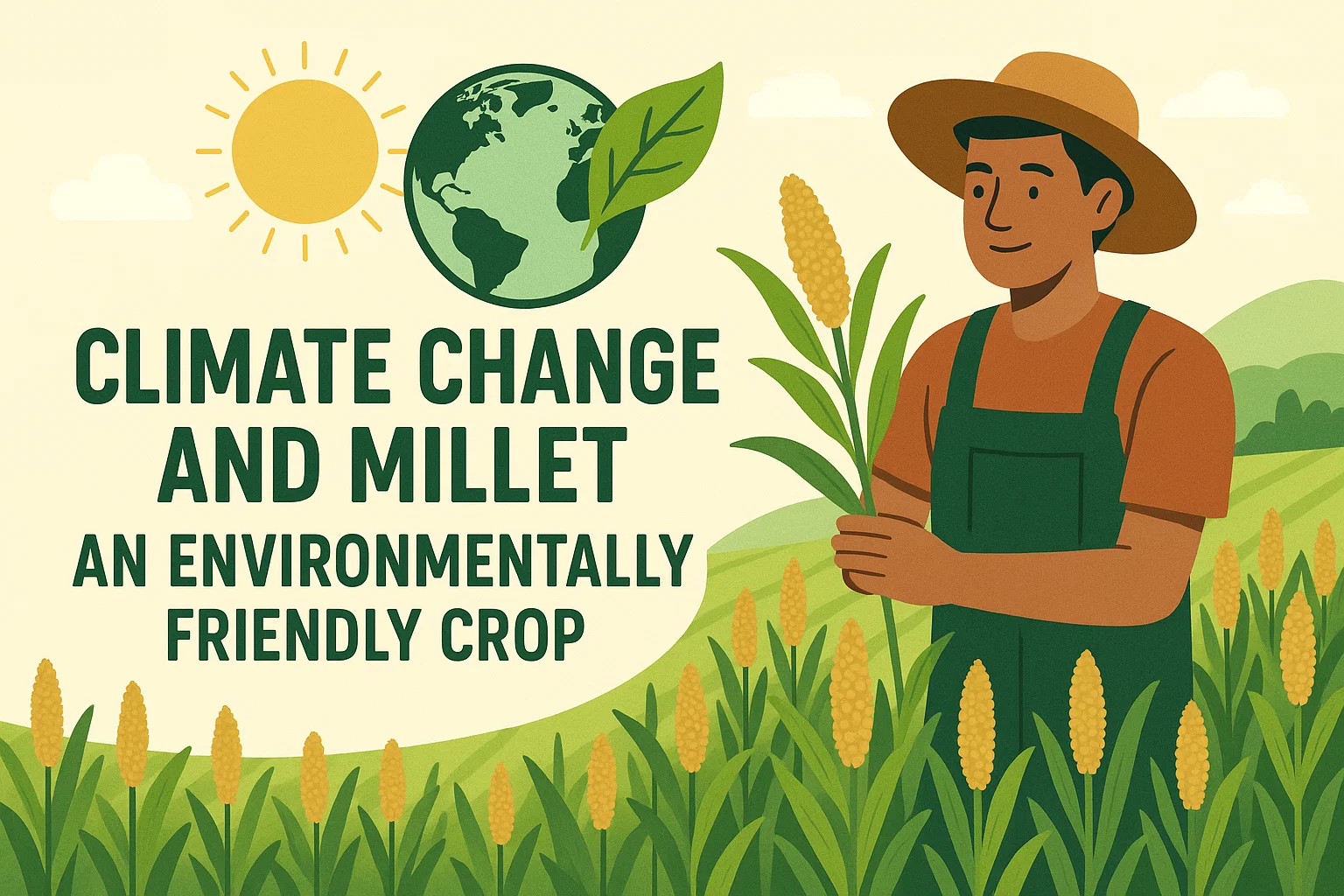
Read MoreEvery farmer knows the worry when rain clouds don't come. In 2025, this worry has become bigger because of climate change. Hot summers last longer, rain comes less often, and many crops fail. But there is a hope. smart farmers are turning to millet cultivation to fight these problems. This small grain that our grandparents grew is now becoming the future of sustainable and climate smart farming. From India to Africa to America, millet is helping farmers grow food when other crops cannot survive.
Why Climate Change Is very difficult and challenging for Farming?
There are many problems farmers face in today’s world:
Water is becoming scarce. Many places that used to get good rain now have long dry periods. Underground water levels are dropping fast.
Heat is getting extreme. Summer temperatures now reach up to 64 degrees Celsius in some farming areas, which kills many traditional crops.
Weather has become unpredictable. Farmers cannot plan when to plant because they don’t know when rain will come.
Soil is getting poor. Hot weather and less water make soil dry and lose its nutrition.
All these problems mean farmers need crops that can survive in tough conditions. This is where climate friendly smart crop; millet comes in.
What Makes Millet Special for Climate Problems?
Millet is not just any grain – it’s a drought-resistant crop that has special advantages:
Uses Very Little Water
Millet needs only 200 to 300 litres of water to produce 1 kg of millet grain. Compare this to rice, which needs thousands of litres for the same amount! Millet grains are 70% more water-efficient than rice.
For farmers in dry areas, this means they can grow food even when there is not much water available.
Handles Extreme Heat
Millet can tolerate temperatures as high as 42°C, and some varieties can handle even more heat. When wheat and corn plants die in extreme heat, millet keeps growing.
Grows in Poor Soil
Many sustainable agriculture practices focus on building good soil, but sometimes farmers don’t have that luxury. Millet can grow in:
- Sandy soil
- Salty soil
- Soil with low nutrition
- Rocky ground where other crops fail
Quick Growing Season
Some types of millet can be ready to harvest in just 60-90 days. This means farmers can grow it between other crops or when they realize their main crop has failed.
Real Stories from Farmers Around the World
Maria from Kenya
Maria grows pearl millet in an area where corn used to be the main crop. “Three years ago, we lost all our corn because of drought. My neighbor told me to try millet. Now I harvest something every year, even when there’s very little rain. My family eats well, and I sell extra grain in the market.”
Rajesh from Rajasthan, India
“My father always said jowar (sorghum millet) was poor man’s food. But now it’s smart man’s food! When other farmers’ wheat fields are empty, my millet gives good harvest. Water tube well works less, electricity bill is less, still I get good income.”
Tom from Texas, USA
American farmer Tom switched part of his land to proso millet after years of drought. “We see millets being used because of concerns about the supply of irrigation water”, says agricultural expert Rob Myers.
How Millet Helps Fight Climate Change
Millet doesn’t just survive climate change – it actually helps fight it:
Carbon Storage
Millet plants have deep roots that put carbon into the soil. This carbon sequestration takes carbon dioxide from the air and stores it underground, helping reduce global warming.
Less Farming Inputs
Millet needs:
- Less water (saves energy for pumping)
- Less fertilizer (reduces chemical production)
- Less pesticide (naturally pest-resistant)
- Less fuel for farm machines
All these savings mean less pollution from farming.
Prevents Soil Loss
Millet’s strong root system holds soil together, preventing soil erosion during storms and wind. This keeps farmland healthy for future crops.
Different Types of Millet for Different Conditions
Not all millet is the same. Farmers choose different types based on their conditions:
Pearl Millet
- Best for very dry areas
- Handles sandy soil well
- Popular in Africa and India
Finger Millet
- Good for hills and mountains
- High nutrition value
- Stores well for long time
Proso Millet
- Fastest growing (60 days)
- Good for short growing seasons
- Popular in America and China
Foxtail Millet
- Handles cold better than others
- Good for higher altitudes
- Traditional crop in Asia
The Science Behind Millet’s Toughness
Scientists have studied why millet survives when other crops fail:
Special Leaves
Millet leaves have a waxy coating that prevents water loss. They also close their pores during hot parts of the day to save moisture.
Deep Roots
Millets are known for their climate-resilient features including adaptation to a wide range of ecological conditions and less irrigational requirements. Their roots go deep into soil to find water that other plants cannot reach.
Efficient Photosynthesis
Millet uses a special type of photosynthesis called C4, which works better in hot, dry conditions than the type most other plants use.
Challenges Farmers Face with Millet
Even though millet is tough, farmers still have some problems:
Market Issues
Many people don’t know how to cook millet, so demand is lower than for rice or wheat. This means lower prices for farmers.
Processing Difficulties
Unlike wheat or rice, there are fewer machines designed for processing millet. This makes it harder to prepare for market.
Lack of Knowledge
Some farmers don’t know which millet variety works best in their area, or the best ways to grow it.
Government Support
Many countries give subsidies for wheat, rice, and corn but not for millet. This makes it financially harder for farmers to switch.
How Governments Are Helping
Many countries now realize millet’s importance for food security and climate adaptation:
India’s Millet Mission
India declared 2023 as International Year of Millets and continues promoting millet farming through:
- Free seeds for farmers
- Better prices in government buying centers
- Research into new varieties
- Training programs for farmers
African Union Support
Several African countries are promoting millet as part of their climate adaptation plans.
UN Recognition
The United Nations acknowledges the role of millets in food security and promotes them as climate-smart crops.
The Future of Millet Farming
Scientists and agricultural experts are excited about millet’s future:
New Varieties
Plant breeders are creating new types of millet that:
- Yield more grain per plant
- Have better taste
- Resist diseases better
- Handle even more extreme conditions
Better Processing
New machines are being developed to make millet processing easier and cheaper for farmers and food companies.
Growing Markets
The drought-resistant cereal millet is undergoing a renaissance in its cultivation and consumption as an important crop in sustainable agrifood systems.
More people are learning about millet’s health benefits and environmental advantages, creating bigger markets for farmers.
Simple Steps for Farmers to Start with Millet
If you’re a farmer thinking about trying millet:
- Start Small – Try millet on a small part of your land first
- Choose the Right Type – Ask local agricultural officers which millet works best in your area
- Learn Proper Techniques – Attend training programs or talk to successful millet farmers
- Find Markets – Research where you can sell your millet before planting
- Join Farmer Groups – Work with other farmers to share knowledge and get better prices
- Australian Farmers – If you are in Australia and wish to farm millets, not sure if its easily available, Australian Government still needs to focus more on this crop.
Millet is truly a climate-smart crop
In 2025, as climate change makes farming harder every year, millet offers real hope for farmers worldwide. This ancient grain has modern solutions for today’s problems.
Climate change can directly influence the quality and availability of resources such as water and soil, adversely affecting food systems and crop productivity. But millet’s natural toughness helps farmers keep growing food even when conditions are difficult.
From using less water to storing carbon in soil, from surviving extreme heat to preventing soil erosion, millet is truly a climate-smart crop. As more farmers discover its benefits and more consumers learn to enjoy it, millet farming will play a bigger role in feeding the world sustainably.
The small grain that fed our ancestors might be exactly what we need to feed future generations in a changing climate. For farmers facing uncertain weather and scarce water, millet isn’t just another crop – it’s a lifeline.
References:
[1] National Center for Biotechnology Information. (2024). “Millets: The future crops for the tropics – Status, challenges and future prospects.” PMC Research Articles. https://pmc.ncbi.nlm.nih.gov/articles/PMC10695985/
[2] ScienceDirect. (2024). “Millets: The future crops for the tropics – Status, challenges and future prospects.” Heliyon Journal. https://www.sciencedirect.com/science/article/pii/S2405844023093313
[3] United Nations Regional Information Centre. (2023). “Millets – good for people, the environment, and farmers.” UNRIC Publications. https://unric.org/en/millets-good-for-people-the-environment-and-farmers/
[4] PubMed. (2024). “Drought resistance strategies in minor millets: a review.” National Library of Medicine. https://pubmed.ncbi.nlm.nih.gov/38879859/
[5] One Acre Fund. (2024). “The Benefits of Growing Millet and Other Drought-Resistant Crops.” Agricultural Development Articles. https://oneacrefund.org/articles/benefits-growing-millet-and-other-drought-resistant-crops
[6] UN News. (2021). “Millets prove tasty solution to climate and food security challenges.” United Nations News Centre. https://news.un.org/en/story/2021/05/1092492
[7] Barn Raising Media. (2023). “Drought Resistant Millet, a Crop for a Changing Climate.” Agricultural News. https://barnraisingmedia.com/drought-reistant-millet-a-crop-for-a-changing-climate/
[8] Food and Agriculture Organization. (2024). “Millet: the ‘forgotten crop’ is making a comeback.” FAO Europe News. https://www.fao.org/europe/news/detail/millet–the–forgotten-crop–is-making-a-comeback/en
[9] Phys.org. (2023). “Millet and sorghum cultivation may provide an answer to rising levels of aridity linked to climate change.” Science News. https://phys.org/news/2023-02-millet-sorghum-cultivation-aridity-linked.html
[10] KOSU Radio. (2023). “Millets — ancient drought-resistant grains — could help the Great Plains survive climate change.” Public Radio. https://www.kosu.org/energy-environment/2023-05-24/millets-ancient-drought-resistant-grains-could-help-the-great-plains-survive-climate-change
Your Guts Are Your Second Brain: How Millet Impacts Your Gut Health
Understanding Your Second Brain Have you ever experienced butterflies in...
Read More
Farm to Food: The Gluten Free Baking Revolution featuring Millets
The Ancient Grain Making Modern Waves Millets represent more than...
Read More
Is Sorghum (Jowar) Gluten Free? Exploring guide for Celiac Disease, Gluten Free and Healthy Living
If you have celiac disease or gluten sensitivity, finding safe...
Read More