
Why do we need more fibre in our diet? Did...
Read MoreAncient grains are experiencing a well-deserved resurgence in popularity. Among these nutritional grains, Finger Millet, also fondly known as Ragi, stands out as a remarkable cereal with an impressive profile of health benefits and environmental resilience. In this blog will take you on a journey to discover the wonders of finger millet, exploring its definition, the methods of its cultivation, its global presence, the ways it can be cooked, its history, the science-backed health advantages it offers, its role in the face of climate change, and ultimately, why it represents a sustainable choice for the future.
What is Finger Millet?
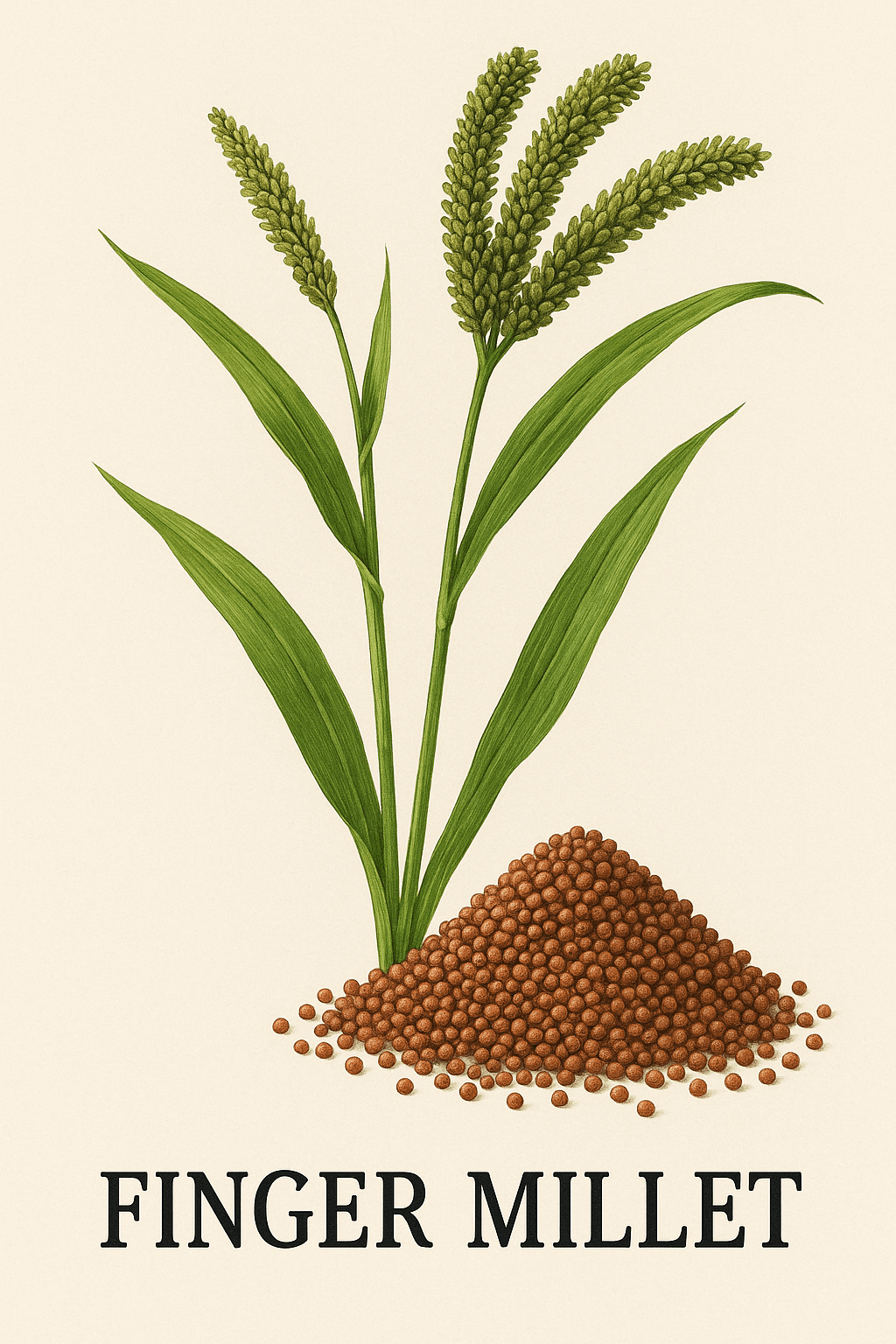
Finger millet (Eleusine coracana) is an annual cereal crop that has been a staple food in the semi-arid regions of Africa and Asia for centuries. The name “finger millet” is referring to the unique shape of its seed head, which branches out into several finger-like spikes. In India, particularly in the southern states like Karnataka and Tamil Nadu, it is more commonly known and loved as Ragi. You might also have heard it being called African millet or red millet, the reddish-brown color that some varieties exhibit.
One of the most significant attributes of finger millet is that it is naturally gluten-free. This makes it an invaluable dietary option for individuals who suffer from celiac disease or have gluten sensitivities, allowing them to enjoy a nutritious grain without adverse effects. Beyond being gluten-free, finger millet is a nutritional, densely packed with essential nutrients that are vital for maintaining good gut health. These include significant amounts of calcium, iron, and dietary fiber. Botanically, finger millet belongs to the Poaceae family, a vast and crucial group that encompasses all grasses, including many of the world’s most important cereal grains.
The History of Finger Millet
Finger millet boasts a rich and ancient history, with its origins deeply rooted in the highlands of East Africa, specifically in the regions of Ethiopia and Uganda, approximately 5,000 years ago. This makes it one of the earliest cereals to be domesticated by humankind. From its primary center of origin in Africa, finger millet is now grown across continents and was introduced to India and parts of Southeast Asia around 3,000 years ago. The Indian subcontinent subsequently became a secondary center of diversity for this important crop, with numerous varieties evolving over time. The scientific name of finger millet, Eleusine coracana, carries its own historical significance. The genus name “Eleusine” is thought to be derived from the Greek city of Eleusis, which was the site of the main temple of Ceres, the Roman goddess of agriculture. The species name “coracana” originates from its name in Sri Lanka.
How Does Finger Millet Grow from Seed to Harvest?
Finger millet thrives in warm climates, specifically in the semi-arid to arid tropics, where it benefits from lots of sunshine and hot temperatures. The crop preference moderate rainfall, around 500 mm annually, its remarkable drought tolerance allows it to flourish even in regions with limited water availability, making it a dependable crop in challenging environments. Finger Millet (Ragi) also exhibits the ability to grow at high altitudes, reaching up to 2,400 meters above sea level, surpassing many other tropical cereals in its capacity to adapt to varying elevations.
In terms of soil requirements, finger millet is adaptable to a range of soil types, including less fertile and weathered tropical lateritic soils with a preferred pH range of 4.5 to 8.0.
The cultivation process of finger millet involves several key stages. It typically begins with thorough soil preparation, which includes deep ploughing followed by secondary tillage to create a fine and smooth seedbed that effectively conserves moisture. Implementing crop rotation, especially with legumes, is a beneficial practice that enhances soil health and fertility.
While finger millet is primarily cultivated under rainfed conditions, irrigation can significantly increase yields, particularly in regions with low or inconsistent rainfall and during critical growth stages such as peak tillering, flowering, and grain setting. Depending on the soil type and climate, 8 to 14 irrigations might be necessary for optimal growth. In water-scarce areas, efficient water management techniques like microirrigation, including drip and sprinkler systems, can be particularly advantageous. Harvesting of finger millet usually occurs between 90 to 120 days after sowing, depending on the specific variety. The crop is typically harvested manually by cutting the mature earheads when they turn a yellowish-brown color and the grains become hard.
Where are these Finger Millets are grown?
Finger millet is predominantly cultivated in the arid and semi-arid regions of Africa and Asia. Its inherent ability to thrive in these often-challenging environments underscores its crucial role in ensuring food security for millions of people. In Africa, the primary growing regions are concentrated in the eastern and southern parts of the continent, including countries such as Uganda, Ethiopia, Kenya, the Democratic Republic of the Congo, Zimbabwe, Zambia, Malawi, and Tanzania. South Asia represents another significant hub for finger millet cultivation, with India and Nepal being the leading producers in this region. India, in particular, stands out as the world’s largest producer of finger millet, contributing a substantial portion to the global supply. Other finger millet producing countries include Ethiopia and Nepal , as well as Niger, China, Mali, Nigeria, and Senegal. While its cultivation is primarily focused in these regions, finger millet is also grown to a lesser extent in other parts of Asia, such as Sri Lanka, and even in some warmer temperate areas across the globe. Within India, the major finger millet growing states are Karnataka, Tamil Nadu, Uttarakhand, Maharashtra, Andhra Pradesh, Odisha, and Jharkhand, with Karnataka often leading in production. The geographical distribution of finger millet cultivation is closely linked to regions that often face water scarcity and food insecurity, highlighting its critical role as a staple crop for vulnerable populations. Its origin in East Africa and subsequent spread to India illustrate historical agricultural connections and the adaptability of this grain.
How to Cook Finger Millet?
Finger millet is a versatile grain that lends itself to a wide range of culinary items. It can be cooked and enjoyed as a whole grain, ground into a fine and nutritious flour, or even malted to enhance its flavor and digestibility. Across diverse cultures, finger millet is incorporated into both sweet and savory dishes, showcasing its adaptability to various palates and culinary traditions.
Cooking whole finger millet is a straightforward process, quite similar to preparing rice or quinoa. A general guideline is to use a ratio of 1 part millet to 2 or 3 parts water or broth, depending on the desired consistency. Soaking the grains for a few hours or even overnight before cooking can help improve their digestibility and reduce the overall cooking time. For an enhanced nutty flavor, lightly toasting the millet in a dry pan before adding the liquid can make a significant difference.
One of the most common and nutritious ways to enjoy it is as a porridge, often known as Ragi Malt or Uji. This simple dish is typically made by whisking finger millet flour with water or milk and then cooking it until it thickens, often with the addition of a sweetener like jaggery or sugar. It’s a popular breakfast option, especially for its energy-boosting properties. This porridge can be easily customized with nuts, seeds, fruits, and spices to suit individual preferences. Savory versions, incorporating vegetables and spices, are also widely enjoyed.
In India, finger millet flour is a staple ingredient for making unleavened flatbreads such as Ragi Roti or Bhakri. These nutritious breads are a common accompaniment to curries, vegetable dishes, and chutneys. The flour can also be mixed with other flours like whole wheat to improve the texture and ease of rolling. In South Indian cuisine, finger millet flour is a key ingredient in the batter for making delicious and healthy dosas (thin pancakes) and idlis (steamed cakes). Often, the batter is fermented, which not only enhances the flavor but also improves the digestibility of the grains.
Finger millet flour can be incorporated into a variety of other dishes, including cakes, cookies, puddings, soups, and stews, adding a unique flavor and a boost of nutrition. In some traditional cultures, finger millet is even used as a base for brewing alcoholic beverages like beer, highlighting its diverse utility. The versatility of finger millet makes it an accessible and appealing grain for anyone looking to add a nutritious and flavorful element to their diet.
Health Benefits of Finger Millet
Finger millet is not just a grain with a long history; it is also a nutritional powerhouse packed with an impressive array of health-promoting properties. Its rich nutritional profile includes high levels of carbohydrates for energy, a significant amount of dietary fiber for digestive health, and essential minerals such as calcium, iron, potassium, magnesium, and zinc. It also provides a good source of protein, including essential amino acids like methionine and tryptophan, which are crucial for various bodily functions. Furthermore, finger millet is loaded with antioxidants, including beneficial polyphenols and tannins, which help protect the body from oxidative stress and may reduce the risk of chronic diseases. It also contains vital vitamins, particularly B vitamins, which play a key role in energy metabolism and overall well-being.
The health benefits of finger millet are numerous and well-supported by scientific research. Its exceptionally high calcium content, the highest among all cereals, is crucial for maintaining strong bones and teeth and plays a vital role in preventing osteoporosis across all age groups. Studies have shown significant calcium retention in the body from finger millet consumption. For individuals managing diabetes, finger millet’s low glycemic index and high fiber content are particularly beneficial in regulating blood sugar levels and preventing sudden spikes. Research indicates that consuming finger millet can lead to lower post-meal blood glucose levels. The fiber content also contributes to heart health by helping to lower cholesterol levels, and the presence of magnesium and potassium supports overall cardiovascular function. For those aiming for weight management, the high fiber content in finger millet promotes a feeling of fullness, which can help control appetite and reduce overall calorie intake. Finger millet is also a good source of natural iron, which is essential for preventing iron deficiency anemia, a common health concern globally. Studies have demonstrated that regular consumption of finger millet can improve hemoglobin levels. The dietary fiber in finger millet also plays a crucial role in promoting digestive health, preventing constipation, and supporting a healthy gut microbiome. Furthermore, the antioxidants present in finger millet help combat oxidative stress and may reduce the risk of various chronic diseases. Certain amino acids like methionine, found in finger millet, may also contribute to healthy skin and hair.
To further illustrate the nutritional advantages of finger millet, consider the following comparison with other common cereals:
| Nutrient | Finger Millet (per 100g) | Rice (per 100g, cooked) | Wheat (per 100g, whole grain) | Maize (per 100g, yellow, raw) |
|---|---|---|---|---|
| Calcium (mg) | 344 | 10 | 36 | 7 |
| Iron (mg) | 3.9 | 0.2 | 3.2 | 2.3 |
| Fiber (g) | 19.1 | 0.4 | 12.1 | 12.8 |
| Protein (g) | 7.3 | 2.7 | 14.4 | 12.1 |
This table clearly demonstrates the superior nutritional profile of finger millet, particularly its significantly higher calcium and fiber content compared to widely consumed grains like rice and maize.
Finger Millet: A Smart Food and Sustainable Crop in the Face of Climate Change
As the world faces with the increasing impacts of climate change on agriculture, the importance of cultivating resilient crops cannot be overlooked. Finger millet offers remarkable tolerance to a variety of adverse environmental conditions. It possesses high drought tolerance, surpassing many other cereals like maize and rice in its ability to thrive with limited water. This makes it a reliable crop in regions prone to water scarcity. Finger millet can grow in low fertility soils and requires minimal agricultural inputs such as fertilizers, making it well-suited for cultivation on marginal lands and reducing the need for synthetic chemicals. Its tolerance to high temperatures is another crucial advantage in the face of rising global temperatures. Additionally, its adaptability to higher elevations allows it to be cultivated in regions where other crops might struggle to thrive.
While finger millet offers strong resilience, climate change may still pose some challenges. Studies suggest that rising temperatures could potentially lead to a reduction in suitable habitats for its cultivation in certain regions. Changes in rainfall patterns could also affect yields, although its inherent drought tolerance offers a degree of protection. Recognizing these potential impacts, ongoing research and breeding efforts are focused on further enhancing finger millet’s climate resilience. Scientists are working to develop varieties with even greater tolerance to drought, heat, and other climate-related stresses, ensuring that this vital crop can continue to play a crucial role in food security for the future.
Why Finger Millet is a Sustainable Choice for the Future
Finger millet stands out as a highly sustainable crop, offering numerous environmental benefits that make it an ideal choice for a greener future. Its water requirements are significantly lower compared to water-intensive crops like rice and wheat. In fact, the amount of irrigated water needed per kilogram of finger millet is considerably less than that required for rice and wheat. This water-efficient nature is particularly important in regions facing increasing water scarcity. Finger millet’s natural resilience to pests and diseases, coupled with its ability to grow in less fertile soils, reduces the need for synthetic fertilizers and pesticides, contributing to healthier ecosystems and reducing the environmental impact of agriculture. When grown in mixed cropping systems, especially with legumes, finger millet can even contribute to improved soil health and biodiversity. The relatively short growing season of finger millet allows for quicker harvests and the potential for multiple cropping cycles within a year, maximizing land productivity and resource utilization. Additionally, its excellent storage properties help minimize post-harvest losses, leading to a more sustainable and efficient food system by reducing waste.
Versatility and Benefits of Finger Millet
Finger millet, or Ragi, is truly a remarkable grain, offering a powerful combination of nutritional richness, climate resilience, and environmental sustainability. Its versatility in the kitchen, along with its long and storied history as a staple food in diverse cultures, makes it an appealing choice for modern consumers seeking healthy and eco-conscious options. By incorporating finger millet into our diets and supporting its wider cultivation, we can contribute to a healthier future for ourselves and the planet, embracing the potential of this ancient grain to nourish both body and earth.
Your Guts Are Your Second Brain: How Millet Impacts Your Gut Health
Understanding Your Second Brain Have you ever experienced butterflies in...
Read More
Farm to Food: The Gluten Free Baking Revolution featuring Millets
The Ancient Grain Making Modern Waves Millets represent more than...
Read More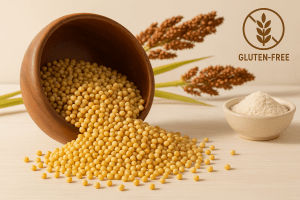
Is Sorghum (Jowar) Gluten Free? Exploring guide for Celiac Disease, Gluten Free and Healthy Living
If you have celiac disease or gluten sensitivity, finding safe...
Read More