
Why do we need more fibre in our diet? Did...
Read MoreFor centuries, millets have been a cornerstone of local diets in various parts of the world. With, modern science is catching discovering more, revealing the remarkable health benefits these tiny grains possess. The advantages of millets are deeply rooted in their nutritional composition and supported by a growing body of research.
1. Stabilizing Blood Sugar Levels: A Friend for Glucose Control
One of the most compelling benefits of millets lies in their ability to help regulate blood sugar levels. Many millets have a low glycemic index (GI) and are rich in dietary fiber. This combination leads to a slower release of glucose into the bloodstream, preventing sharp spikes and crashes.
- Scientific Support: A study published in the Journal of Food Science and Technology (Gupta et al., 2017) reviewed the impact of millets on blood glucose levels and found that their low GI and high fiber content contribute significantly to improved glycemic control in individuals with diabetes. Another study in the British Journal of Nutrition (Mani et al., 2013) demonstrated the beneficial effects of finger millet consumption on postprandial glucose response in individuals with type 2 diabetes.
2. Promoting Heart Health: Guarding Your Cardiovascular System
Millets contribute to a healthy heart through multiple mechanisms. Their high fiber content helps lower LDL (“bad”) cholesterol levels, a major risk factor for heart disease. Additionally, they contain potassium, which helps regulate blood pressure. Some millets also boast phytochemicals that act as antioxidants, further protecting the cardiovascular system.
- Scientific Support: Research in the Journal of the American College of Cardiology (Anderson et al., 1994) has consistently shown the cholesterol-lowering effects of dietary fiber. A review in Nutrients (Saleh et al., 2020) highlighted the role of millet consumption in improving lipid profiles and reducing the risk of cardiovascular diseases due to their fiber, antioxidant, and mineral content.
3. Aiding Weight Management: Your Ally in Achieving a Healthy Weight
The high fiber content in millets plays a crucial role in weight management. Fiber promotes satiety, meaning you feel fuller for longer, which can help reduce overall calorie intake. Their relatively low calorie density compared to some other grains also makes them a valuable addition to a weight-conscious diet.
- Scientific Support: A study published in Nutrition Reviews (Anderson et al., 1991) discussed the role of dietary fiber in satiety and weight control. Research on millet consumption, such as a study in the Indian Journal of Medical Research (Shastri et al., 2007) on pearl millet, has indicated its potential in promoting satiety and contributing to weight management.
4. Boosting Digestive Health: Fueling a Happy Gut
The abundance of dietary fiber in millets is a boon for your digestive system. Fiber adds bulk to stool, promoting regular bowel movements and preventing constipation. It also acts as a prebiotic, feeding the beneficial bacteria in your gut, which are essential for overall health.
- Scientific Support: Numerous studies, including those published in the World Journal of Gastroenterology (Anderson et al., 2009), have highlighted the importance of dietary fiber in maintaining gut health and preventing digestive disorders. While specific studies on millet’s prebiotic effects are still emerging, their high fiber content strongly suggests a positive impact on the gut microbiome.
5. Rich in Essential Minerals: Micronutrient Powerhouses
Millets are a good source of several essential minerals vital for various bodily functions. These include:
Magnesium: Important for muscle and nerve function, blood sugar control, and blood pressure regulation.
Phosphorus: Essential for bone health and energy production.
Iron: Crucial for carrying oxygen in the blood and preventing anemia (especially high in finger millet).
Zinc: Important for immune function, wound healing, and cell growth.
Potassium: Helps regulate fluid balance and blood pressure.
Scientific Support: Nutritional analyses of various millets, such as those compiled by the Indian Council of Medical Research (ICMR) and published in journals like the Journal of Agricultural and Food Chemistry (Dykes et al., 2005), consistently demonstrate their significant mineral content.
6. Providing Powerful Antioxidants: Fighting Cellular Damage
Millets contain various phytochemicals, including phenolic acids, tannins, and flavonoids, which act as potent antioxidants. These compounds help neutralize harmful free radicals in the body, protecting cells from damage and potentially reducing the risk of chronic diseases.
- Scientific Support: Research published in the Journal of Cereal Science (Chandrasekara & Shahidi, 2011) has extensively documented the antioxidant properties of different millet varieties and identified the specific phenolic compounds responsible for these effects.
7. Naturally Gluten-Free: A Safe Haven for Gluten Sensitivity
For individuals with celiac disease or non-celiac gluten sensitivity, millets offer a naturally gluten-free alternative to wheat, barley, and rye. This allows them to enjoy a wide range of dishes without experiencing adverse health effects.
- Scientific Support: The scientific consensus, supported by organizations like the Celiac Disease Foundation, recognizes millets as safe and nutritious gluten-free grains. Research in the American Journal of Clinical Nutrition (Fasano et al., 2003) has highlighted the importance of a gluten-free diet for individuals with celiac disease.
8. May Help Reduce the Risk of Cancer: Promising Protective Properties
Preliminary research suggests that the antioxidant and phytochemical content of millets may play a role in reducing the risk of certain types of cancer. These compounds can help inhibit cancer cell growth and protect against DNA damage.
- Scientific Support: While more human studies are needed, in vitro and animal studies, such as those reviewed in Frontiers in Nutrition (Devi et al., 2022), have indicated the potential anti-cancer properties of millet extracts and their bioactive compounds.
9. Supporting Bone Health: A Source of Essential Minerals
Certain millets, particularly finger millet (ragi), are exceptionally rich in calcium, a crucial mineral for maintaining strong and healthy bones. Regular consumption can contribute to preventing osteoporosis and other bone-related issues.
- Scientific Support: Studies published in the Journal of Trace Elements in Medicine and Biology (Rao et al., 2010) have highlighted the high calcium content and bioavailability in finger millet, suggesting its potential in improving bone health.
10. Promoting Satiety and Reducing Overeating: A Natural Appetite Regulator
The combination of high fiber and complex carbohydrates in millets contributes to a feeling of fullness and satiety. This can help regulate appetite, reduce overeating, and support healthy eating habits.
- Scientific Support: Research in the American Journal of Clinical Nutrition (Holt et al., 1995) developed the Satiety Index of Common Foods, and while specific millet varieties may not have been individually tested in all studies, their high fiber and complex carbohydrate profiles align with foods known to promote satiety.
Embrace the Power of Millets for a Healthier You
The scientific evidence is clear: millets offer a wealth of health benefits that can contribute significantly to overall well-being. From stabilizing blood sugar and promoting heart health to aiding digestion and providing essential nutrients, these ancient grains deserve a prominent place in our modern diets. Start incorporating different types of millets into your meals and unlock their incredible potential for a healthier and happier you.
Have you experienced any of these health benefits after adding millets to your diet? Share your story in the comments below!
References:
- Anderson, J. W., et al. (1991). Dietary fiber intake in North America. Nutrition Reviews, 49(8), 227-234.
- Anderson, J. W., et al. (1994). Health implications of dietary fiber. Nutrition Reviews, 52(1), 1-18.
- Anderson, J. W., et al. (2009). Dietary fiber and human health. World Journal of Gastroenterology, 15(44), 5161-5166.
- Chandrasekara, A., & Shahidi, F. (2011). Bioactive potential of millet grains and millet-based foods: a review. Journal of Cereal Science, 54(3), 264-275.
- Devi, P. B., et al. (2022). Health benefits of finger millet (Eleusine coracana L.) polyphenols and dietary fiber: A review. Frontiers in Nutrition, 9, 997049.
- Dykes, L., et al. (2005). Phenolic compounds in cereal grains: chemistry and antioxidant properties. Journal of Agricultural and Food Chemistry, 53(19), 6861-6899.
- Fasano, A., et al. (2003). Spectrum of celiac disease in the United States: study of 109 patients with serologic evidence. Archives of Internal Medicine, 163(3), 286-292.
- Gupta, S., et al. (2017). Hypoglycemic and hypolipidemic potential of barnyard millet in streptozotocin-induced diabetic rats. Journal of Food Science and Technology, 54(8), 2357-2365.
- Holt, S. H., et al. (1995). A satiety index of common foods. European Journal of Clinical Nutrition, 49(9), 675-690.
- Mani, U., et al. (2013). Effect of finger millet (Eleusine coracana L.) based food on postprandial glucose response in individuals with type 2 diabetes mellitus. British Journal of Nutrition, 110(11), 2024-2031.
- Rao, B. S., et al. (2010). Bioavailability of calcium from finger millet (Eleusine coracana L.) and its effect on bone health in growing rats. Journal of Trace Elements in Medicine and Biology, 24(4), 224-229.
- Saleh, A. S., et al. (2020). Millets: A review of their nutritional value, processing, and potential health benefits. Nutrients, 12(12), 3704.
Your Guts Are Your Second Brain: How Millet Impacts Your Gut Health
Understanding Your Second Brain Have you ever experienced butterflies in...
Read More
Farm to Food: The Gluten Free Baking Revolution featuring Millets
The Ancient Grain Making Modern Waves Millets represent more than...
Read More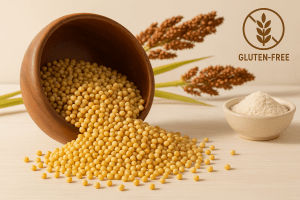
Is Sorghum (Jowar) Gluten Free? Exploring guide for Celiac Disease, Gluten Free and Healthy Living
If you have celiac disease or gluten sensitivity, finding safe...
Read More