Why do we need more fibre in our diet? Did...
Read MoreCorn and Sorghum, both are gaining attention as nutritious options. While corn has been a staple food for millions worldwide, sorghum is emerging as a powerful ancient grain with impressive health benefits. In this blog, lets explore Corn vs Sorghum to better understand which one might be better for your health and dietary needs.
What is Corn?
Corn is also known as maize. Corn is one of the world’s most widely grown cereal grains. Its scientific name is Zea mays, and it comes from a tall grass plant native to the Americas. Corn has been cultivated for thousands of years and now serves as a primary food source for billions of people globally.
There are several varieties of corn, including sweet corn, field corn, and popcorn. Sweet corn is what most people eat fresh, while field corn is used for animal feed and processed foods. Corn is naturally gluten-free and provides energy through its carbohydrate content. Majority of the corn varieties found around the world are genetically modified unless you source non-GMO corn products.
What is Sorghum?
Sorghum is an ancient grain that has been cultivated for over 5,000 years. It comes from the plant Sorghum bicolor and appears as small, round seeds. This hardy grain originated in Africa and has been a staple food across Africa, Asia, and parts of the Americas for many generations. Majority of the Sorghum varities are non-GMO.
Sorghum is naturally gluten-free and extremely drought-resistant, making it an excellent crop for arid and semi-arid regions. It can survive in harsh conditions where other grains might fail, making it an important food security crop in many developing countries.
Corn vs Sorghum Nutrition Comparison
When comparing the nutritional profiles of corn and sorghum, research reveals significant differences that can impact your health choices.
Nutritional Comparison Table
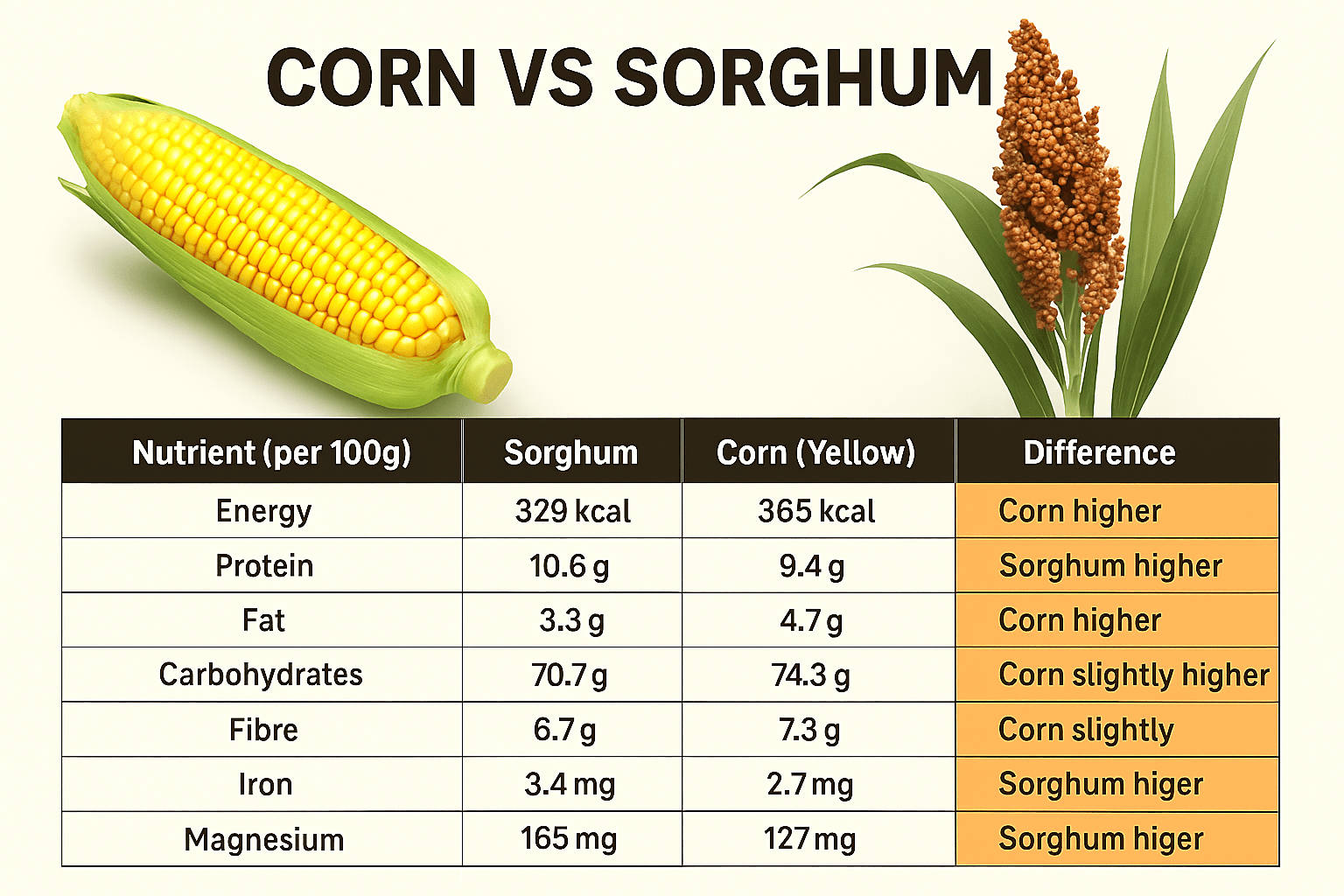
The table below shows the nutritional differences between corn and sorghum based on scientific research data³:
| Nutrient (per 100g) | Sorghum | Corn (Yellow) | Difference |
|---|---|---|---|
| Energy | 329 kcal | 365 kcal | Corn higher |
| Protein | 10.6g | 9.4g | Sorghum higher |
| Fat | 3.3g | 4.7g | Corn higher |
| Carbohydrates | 70.7g | 74.3g | Corn higher |
| Fibre | 6.7g | 7.3g | Corn slightly higher |
| Iron | 3.4mg | 2.7mg | Sorghum higher |
| Magnesium | 165mg | 127mg | Sorghum higher |
| Phosphorus | 289mg | 210mg | Sorghum higher |
| Zinc | 1.67mg | 2.21mg | Corn higher |
| Manganese | 1.63mg | 0.485mg | Sorghum much higher |
| Vitamin B1 | 0.33mg | 0.385mg | Corn slightly higher |
| Vitamin B3 | 2.93mg | 3.627mg | Corn higher |
| Vitamin C | 0mg | 6.8mg | Corn higher |
| Glycemic Index | 62-70 | 52-69 | Similar range |
This comparison shows that while both grains offer valuable nutrition, they excel in different areas. Sorghum provides more protein, iron, magnesium, phosphorus, and manganese, while corn offers more vitamin C, zinc, and B vitamins.
Protein Quality Research indicates that sorghum contains higher levels of protein compared to corn, and the protein quality in sorghum is considered superior due to its amino acid profile¹⁷. Studies show that coloured sorghum varieties contain richer essential amino acids compared to regular corn¹.
Mineral Content Sorghum demonstrates superior mineral content in several key areas, particularly manganese, magnesium, and iron³. These minerals are crucial for bone health, energy metabolism, and blood formation.
Antioxidant Properties Scientific studies reveal that sorghum, especially coloured varieties, contains higher levels of antioxidants compared to corn⁴. These antioxidants help protect cells from damage and may reduce the risk of chronic diseases.
Health Benefits Comparison
Both grains offer unique health advantages, but they support different aspects of wellness.
Blood Sugar Management Both corn and sorghum have similar glycemic index ranges, making them relatively comparable for blood sugar impact. However, fibre present in sorghum along with the higher protein content may provide better satiety and more stable blood sugar levels over time.
Digestive Health Corn has a slight edge in total fibre content, which supports digestive health and helps maintain healthy gut bacteria. However, sorghum’s fibre is often considered more beneficial due to its resistant starch content, which acts as a prebiotic. This is an important point to note when considering which grain to include in your diet.
Heart Health Both grains can support cardiovascular health through their fibre content and beneficial plant compounds. Sorghum’s higher magnesium content may provide additional heart health benefits, as magnesium is essential for proper heart rhythm and blood pressure regulation.
Antioxidant Support Sorghum, particularly red and black varieties, contains higher levels of antioxidants including phenolic compounds and flavonoids. These compounds help fight inflammation and oxidative stress in the body.
Environmental Impact Comparison
The environmental footprint of these two grains differs significantly, which may influence your choice from a sustainability perspective.
Water Usage Sorghum is remarkably water-efficient compared to corn. Research shows that sorghum requires about 30% less water than corn to produce the same amount of grain⁵. This makes sorghum a more sustainable choice in water-scarce regions.
Climate Resilience Studies indicate that sorghum is more drought-tolerant and heat-resistant than corn⁶. Climate change research suggests that sorghum may be a more reliable crop as global temperatures rise and weather patterns become more unpredictable.
Soil Health Both crops can benefit soil health when grown in rotation systems. However, sorghum’s deep root system can help improve soil structure and water infiltration better than corn’s shallow root system.
Cooking and Preparation Differences
Understanding how to prepare these grains can help you incorporate them into your diet effectively.
Sorghum Preparation Sorghum requires longer cooking times than most grains – typically 45-60 minutes when boiled. You can cook whole sorghum grains using a 3:1 water-to-grain ratio. The texture is chewy and nutty, similar to barley or wheat berries. It is best to soak Sorghum for at-least 6 hours to get maximum benefits out of the grain.
Sorghum can also be:
- Popped like popcorn for a healthy snack
- Ground into flour for baking
- Used to make porridge or risotto-style dishes
Corn Preparation Corn is more versatile in its preparation options:
- Fresh sweet corn can be boiled, grilled, or steamed in 5-10 minutes
- Dried corn kernels can be ground into cornmeal or polenta
- Popcorn provides a quick, healthy snack option
- Corn tortillas and other corn-based products are widely available
Cost and Availability
Corn is generally more widely available and less expensive than sorghum in most markets. You can find corn products in virtually every grocery store, from fresh corn on the cob to cornmeal and corn flour.
Sorghum is becoming more available but may still require shopping at health food stores or ordering online. The price is typically higher than corn, though this gap is narrowing as demand increases.
Which is Better for Weight Management?
Both grains can support healthy weight management when consumed as part of a balanced diet.
Sorghum advantages for weight management:
- Higher protein content helps increase satiety
- Better mineral profile supports healthy metabolism
- Resistant starch content may help with appetite control
- Lower processing typically means fewer added ingredients
Corn advantages for weight management:
- Higher fibre content promotes fullness
- More readily available in whole food forms
- Familiar taste makes it easier to incorporate into meals
- Popcorn provides a low-calorie snack option when air-popped
Gluten-Free Options
Both sorghum and corn are naturally gluten-free, making them excellent alternatives for people with celiac disease or gluten sensitivity. This is particularly important as gluten-free diets become more common for health reasons.
Sorghum flour can substitute for wheat flour in many recipes, while corn-based products like cornmeal and corn tortillas provide familiar gluten-free options.
Cultural and Traditional Uses
Corn Traditions Corn has deep cultural significance in the Americas, where it originated. It remains a staple in Mexican, Central American, and many Native American cuisines. Common traditional uses include:
- Tortillas and tamales
- Polenta in Italian cuisine
- Cornbread in Southern American cooking
- Popcorn as a snack food
Sorghum Traditions Sorghum holds cultural importance across Africa and parts of Asia:
- Porridge and flatbreads in African countries
- Fermented beverages in traditional brewing
- Sweet sorghum syrup in some American regions
- Animal feed in agricultural communities
Processing and Varieties
Sorghum Varieties Sorghum comes in several types:
- White sorghum (mild flavor, most common)
- Red sorghum (higher antioxidants, nuttier taste)
- Black sorghum (highest antioxidant content)
- Sweet sorghum (used for syrup production)
Corn Varieties Corn offers numerous varieties:
- Sweet corn (eaten fresh)
- Field corn (dried for processing)
- Popcorn (specific variety that pops)
- Colored corn varieties (blue, red, white)
Climate Change Considerations
Research on climate change impacts shows important differences between these crops:
Temperature Tolerance Sorghum demonstrates superior heat tolerance compared to corn. Studies indicate that sorghum can maintain productivity at higher temperatures that would significantly reduce corn yields.
Water Stress Resilience Sorghum’s drought tolerance makes it a more reliable crop as water resources become scarcer. Climate models suggest that sorghum-growing regions may expand as corn-suitable areas shrink due to changing precipitation patterns.
Nutritional Considerations for Different Life Stages
For Children Both grains can be part of healthy diets for children. Corn’s vitamin C content and familiar taste may make it more appealing to young eaters, while sorghum’s higher protein and mineral content support growing bodies.
For Adults Adults may benefit more from sorghum’s superior mineral profile and antioxidant content, especially for long-term health maintenance and disease prevention.
For Seniors Both grains provide important nutrients for older adults. Sorghum’s higher magnesium content supports bone health, while corn’s B vitamins support cognitive function.
Things to Consider
When choosing between sorghum and corn, consider:
- Your nutritional goals and health needs
- Environmental and sustainability concerns
- Cooking time and preparation preferences
- Budget and local availability
- Taste preferences and culinary traditions
- Dietary restrictions or allergies
Overall;
Both corn and sorghum offer valuable nutritional benefits and can be part of a healthy, diverse diet. Sorghum appears to have advantages in protein content, mineral density, and environmental sustainability. Its drought tolerance and superior mineral profile make it an excellent choice for those focused on long-term health and environmental impact.
Corn, however, remains more accessible, versatile, and familiar to most people. Its higher vitamin C content and established place in various cuisines make it a practical choice for many households.
The optimal choice depends on your individual health goals, environmental values, and practical considerations. Consider incorporating both grains into your diet to enjoy the unique benefits each offers.
As research continues on both ancient and modern grains, we’re likely to discover even more about their potential benefits for human health and sustainable agriculture. The future may see both corn and sorghum playing important roles in feeding the world’s growing population while protecting our planet’s resources.
References:
¹ PMC – National Center for Biotechnology Information (2024). Nutrient Composition of Indonesian Specialty Cereals: Rice, Corn, and Sorghum as Alternatives to Combat Malnutrition. https://pmc.ncbi.nlm.nih.gov/articles/PMC10764230/
² Food and Agriculture Organization (2023). Sorghum and Millets in Human Nutrition. http://www.fao.org/3/t0818e/t0818e00.htm
³ USDA National Nutrient Database. Corn, yellow vs Sorghum grain – nutritional comparison. https://fdc.nal.usda.gov/
⁴ Journal of Cereal Science (2022). Antioxidant properties and phenolic compounds in sorghum varieties. https://www.sciencedirect.com/science/article/abs/pii/S073352102200045X
⁵ Agricultural Water Management (2023). Water use efficiency comparison between sorghum and corn in semi-arid regions. https://www.sciencedirect.com/journal/agricultural-water-management
⁶ Climate Change Research (2024). Drought tolerance mechanisms in sorghum versus corn under changing climate conditions. https://link.springer.com/journal/10584
⁷ Nutrients Journal (2023). Protein quality and amino acid profiles of ancient grains including sorghum. https://www.mdpi.com/journal/nutrients
⁸ Environmental Science & Policy (2024). Sustainable grain production: Comparing environmental impacts of sorghum and corn cultivation. https://www.sciencedirect.com/journal/environmental-science-and-policy
⁹ International Journal of Food Sciences and Nutrition (2023). Glycemic index variations in cereal grains: A comprehensive review. https://www.tandfonline.com/journal/iijf
¹⁰ Frontiers in Plant Science (2024). Ancient grains for modern nutrition: The case for sorghum in climate adaptation. https://www.frontiersin.org/journals/plant-science
Your Guts Are Your Second Brain: How Millet Impacts Your Gut Health
Understanding Your Second Brain Have you ever experienced butterflies in...
Read More
Farm to Food: The Gluten Free Baking Revolution featuring Millets
The Ancient Grain Making Modern Waves Millets represent more than...
Read More
Is Sorghum (Jowar) Gluten Free? Exploring guide for Celiac Disease, Gluten Free and Healthy Living
If you have celiac disease or gluten sensitivity, finding safe...
Read More