
Why do we need more fibre in our diet? Did...
Read MoreUnderstanding ADHD and Nutritional Connections
Can Millets Help with ADHD? ADHD is a neurodevelopmental disorder that affects approximately 5–10% of children and 2–5% of adults globally¹. Research has increasingly identified connections between nutrition and ADHD symptoms, suggesting that dietary factors may influence brain function, neurotransmitter production, and cognitive performance. Scientific studies indicate that certain nutritional deficiencies and dietary patterns may exacerbate ADHD symptoms, whilst specific nutrients and food choices might help support better attention and behavioural regulation². This growing body of research has led to increased interest in exploring how traditional foods like millets might contribute to comprehensive ADHD management strategies.
IMPORTANT MEDICAL DISCLAIMER:
This article is for educational and informational purposes only. It is not intended as medical advice, diagnosis, or treatment recommendation for ADHD or any other medical condition. ADHD is a complex neurological disorder that requires professional medical evaluation and treatment. Always consult with qualified healthcare professionals, including physicians, psychiatrists, or registered dietitians, before making any dietary changes or treatment decisions related to ADHD. Do not rely solely on the content within this blog, as this represents a general exploration of scientific ideas rather than personalised medical guidance.
Attention Deficit Hyperactivity Disorder (ADHD) affects millions of children and adults worldwide, characterised by difficulties with attention, hyperactivity, and impulse control. Whilst conventional treatment typically involves medication and behavioural therapy, emerging research suggests that nutrition may play a supporting role in managing ADHD symptoms. This article explores the scientific evidence to further understand whether millets, ancient grains with unique nutritional properties may offer benefits for individuals with ADHD.
What Makes Millets Potentially Beneficial for ADHD?
Millets possess several nutritional characteristics that align with nutrients identified in ADHD research as potentially beneficial for brain function and symptom management.
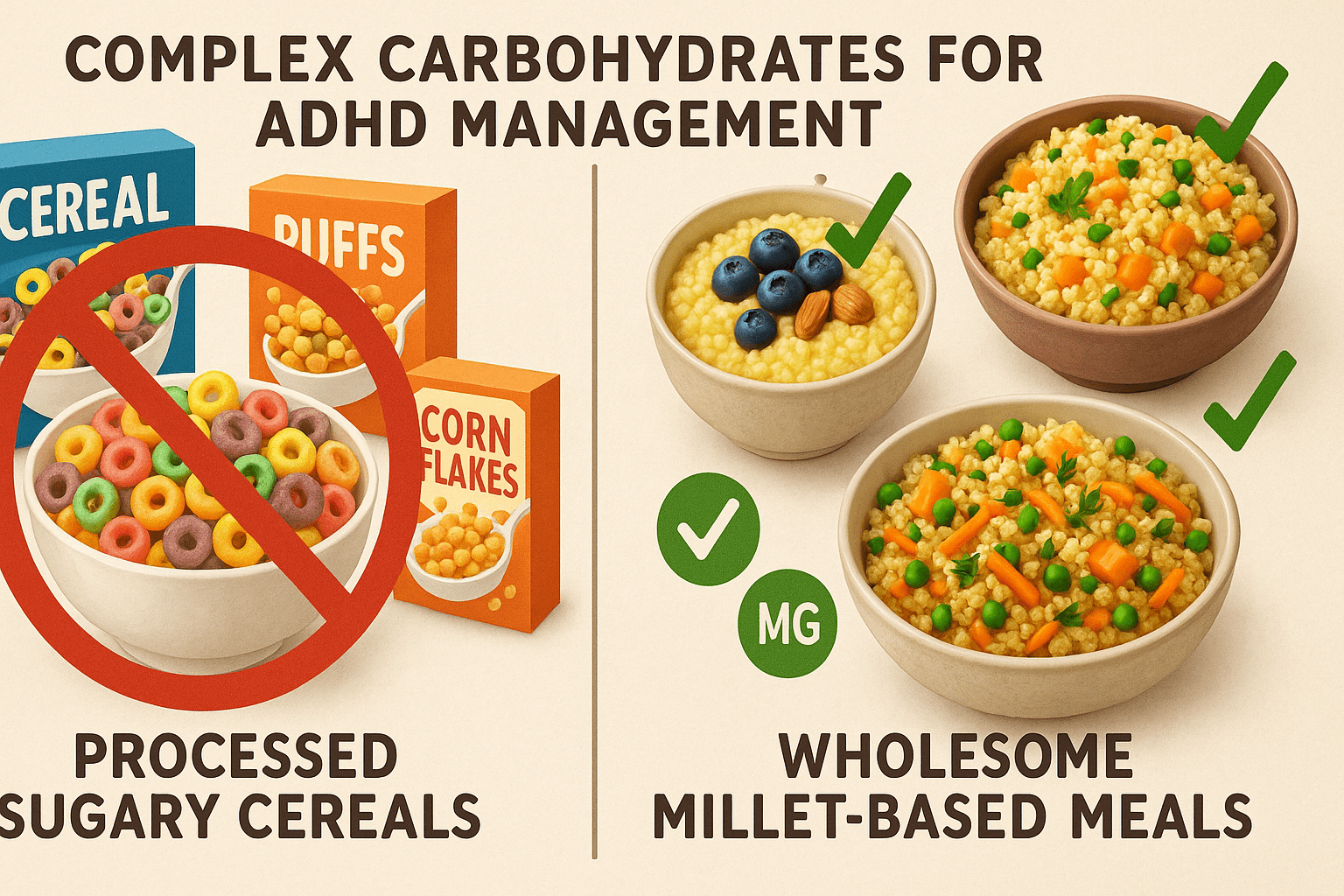
Complex Carbohydrates and Brain Function
Research demonstrates that stable blood glucose levels are crucial for optimal brain function and attention³. Studies show that individuals with ADHD may be more sensitive to blood sugar fluctuations, which can worsen symptoms of inattention and hyperactivity⁴.
Millets provide complex carbohydrates with a lower glycaemic index (54–68) compared to refined grains⁵. Scientific evidence suggests that foods with lower glycaemic indices may help maintain more stable blood glucose levels, potentially supporting sustained attention and reducing behavioural fluctuations associated with blood sugar spikes and crashes⁶.
Essential Minerals for Neurological Function
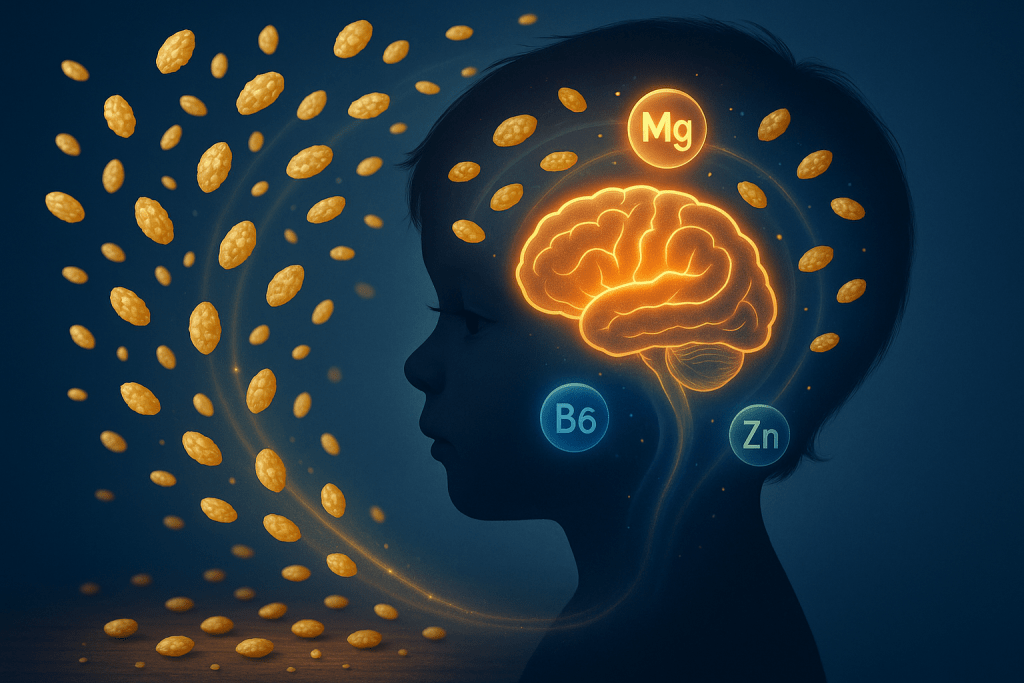
Scientific research has identified several mineral deficiencies that may be more common in individuals with ADHD, and millets happen to be rich sources of many of these crucial nutrients.
Iron and ADHD
Multiple studies have found associations between iron deficiency and ADHD symptoms⁷. Research indicates that children with ADHD are more likely to have lower iron levels, and iron deficiency may contribute to restless leg syndrome, sleep disturbances, and attention problems⁸.
Millets contain significant amounts of iron, with finger millet providing up to 3.9 mg per 100g and pearl millet containing approximately 8.0 mg per 100g⁹. A systematic review published in the Journal of Attention Disorders found that iron supplementation might help improve ADHD symptoms in children with iron deficiency¹⁰.
Magnesium and Neurological Health
Scientific studies suggest that magnesium deficiency may be associated with ADHD symptoms¹¹. Research indicates that magnesium plays crucial roles in neurotransmitter function, nerve transmission, and regulation of the stress response system¹².
Millets are excellent sources of magnesium, containing 114–137 mg per 100g depending on the variety¹³. Clinical studies have shown that magnesium supplementation may help reduce hyperactivity and improve attention in some children with ADHD¹⁴.
Zinc and Cognitive Function
Research has consistently found lower zinc levels in children with ADHD compared to control groups¹⁵. Zinc is essential for neurotransmitter metabolism, particularly dopamine regulation, which is central to ADHD pathophysiology¹⁶.
Millets provide meaningful amounts of zinc, with levels ranging from 1.68–3.1 mg per 100g¹⁷. Several controlled studies have demonstrated that zinc supplementation may help reduce ADHD symptoms, particularly hyperactivity and impulsivity¹⁸.
B Vitamins and Neurotransmitter Production
Scientific research emphasises the importance of B vitamins in neurotransmitter synthesis and brain function¹⁹. Studies suggest that individuals with ADHD may have increased needs for certain B vitamins due to altered metabolism or dietary inadequacies²⁰.
Millets contain several important B vitamins:
- Thiamine (B1): Essential for glucose metabolism in the brain
- Riboflavin (B2): Important for energy production in brain cells
- Niacin (B3): Crucial for neurotransmitter synthesis
- Pyridoxine (B6): Vital for dopamine and serotonin production²¹
Research published in the Journal of Child and Adolescent Psychopharmacology found that B vitamin supplementation might help improve cognitive function and reduce some ADHD symptoms²².
Protein Content and Neurotransmitter Precursors
Millets provide high quality protein containing amino acids that serve as precursors for important neurotransmitters²³. Scientific studies indicate that adequate protein intake, particularly amino acids like tyrosine and tryptophan, is important for optimal neurotransmitter production²⁴.
Research suggests that protein rich breakfasts may help improve attention and behaviour in children with ADHD by providing sustained energy and supporting neurotransmitter synthesis²⁵. Millets’ protein content (8–15% depending on variety) could contribute to meeting these nutritional needs²⁶.
Scientific Evidence for Dietary Interventions in ADHD
Whilst specific research on millets and ADHD is limited, broader scientific evidence supports the role of dietary interventions in ADHD management.
Elimination Diets and Food Sensitivities
Multiple systematic reviews have found that elimination diets may help reduce ADHD symptoms in some children²⁷. Research suggests that certain food additives, artificial colours, and allergens may exacerbate ADHD symptoms in sensitive individuals²⁸.
Millets are naturally free from common allergens and food additives, making them potentially suitable for elimination diet protocols. Their gluten free nature also makes them appropriate for individuals with both ADHD and gluten sensitivity, which some research suggests may co occur²⁹.
Mediterranean Style Diets and Cognitive Function
Scientific studies have found associations between Mediterranean style dietary patterns and reduced ADHD symptoms³⁰. These diets emphasise whole grains, fruits, vegetables, lean proteins, and healthy fats whilst minimising processed foods.
Research published in Pediatrics found that children following Mediterranean style diets had lower rates of ADHD diagnosis³¹. Millets align well with this dietary pattern as unprocessed, nutrient dense whole grains.
Micronutrient Supplementation Studies
Several controlled trials have examined the effects of broad spectrum micronutrient supplementation on ADHD symptoms³². A systematic review in the Journal of the American Academy of Child & Adolescent Psychiatry found that micronutrient supplementation might help reduce ADHD symptoms, particularly in individuals with nutritional deficiencies³³.
Millets provide many of the micronutrients studied in these trials, including iron, magnesium, zinc, and B vitamins, potentially offering a food based approach to improving nutritional status.
Potential Mechanisms: How Millets Might Support ADHD Management
Based on current scientific understanding, several mechanisms could explain how millets might support individuals with ADHD:
Blood Sugar Stabilisation
Research indicates that blood glucose fluctuations can affect attention, mood, and behaviour³⁴. Studies show that individuals with ADHD may be particularly sensitive to these fluctuations³⁵. Millets’ complex carbohydrates and fibre content may help maintain more stable blood glucose levels compared to refined grains³⁶.
Neurotransmitter Support
Scientific evidence suggests that nutritional deficiencies can impair neurotransmitter synthesis and function³⁷. The minerals and vitamins in millets are cofactors in the production of dopamine, norepinephrine, and serotonin—neurotransmitters central to ADHD pathophysiology³⁸.
Inflammation Reduction
Emerging research suggests that neuroinflammation may play a role in ADHD symptoms³⁹. Studies indicate that certain foods may either promote or reduce inflammation in the brain⁴⁰. Millets contain antioxidants and anti inflammatory compounds that might help support brain health⁴¹.
Gut Brain Axis
Recent research has identified connections between gut health and ADHD symptoms⁴². Studies suggest that the gut microbiome may influence neurotransmitter production and brain function⁴³. Millets’ prebiotic fibre content could potentially support beneficial gut bacteria⁴⁴.
Limitations and Research Gaps
It’s important to acknowledge the limitations in current research:
Limited Direct Studies
Currently, no published studies have directly examined the effects of millet consumption on ADHD symptoms. The potential benefits are inferred from research on individual nutrients found in millets and broader dietary pattern studies.
Individual Variability
Scientific research consistently shows that ADHD is highly heterogeneous, with individuals responding differently to various interventions⁴⁵. Nutritional approaches that help some individuals may not benefit others.
Complex Aetiology
ADHD has complex genetic, neurological, and environmental causes⁴⁶. Whilst nutrition may play a supporting role, it is unlikely to be a standalone treatment for most individuals with ADHD.
Practical Considerations for Including Millets in ADHD Management
For families considering incorporating millets into comprehensive ADHD management strategies, several factors should be considered:
Gradual Introduction
Research on dietary changes suggests that gradual introduction of new foods is often more successful than dramatic dietary shifts⁴⁷. Starting with small amounts of cooked millet and gradually increasing consumption may help with acceptance and digestive adaptation.
Balanced Approach
Scientific evidence supports comprehensive approaches to ADHD management that may include medication, behavioural therapy, and supportive nutritional strategies⁴⁸. Millets should be considered as part of an overall healthy diet rather than a singular intervention.
Individual Assessment
Research emphasises the importance of individualised approaches to ADHD treatment⁴⁹. Working with healthcare professionals can help determine whether dietary modifications, including millet inclusion, might be appropriate for specific individuals.
Nutritional Profile Supporting ADHD Related Research
The following table summarises the nutrients in millets that have been studied in ADHD research:
| Nutrient | Millet Content (per 100g) | ADHD Research Findings | References |
| Iron | 3.9–8.0 mg | Associated with attention improvement | Studies ⁷⁸¹⁰ |
| Magnesium | 114–137 mg | May reduce hyperactivity | Studies ¹¹¹⁴ |
| Zinc | 1.68–3.1 mg | Linked to symptom reduction | Studies ¹⁵¹⁸ |
| B Vitamins | Various levels | Important for neurotransmitter function | Studies ¹⁹²² |
| Complex Carbs | 70–75% | Supports stable blood glucose | Studies ³⁶ |
| Protein | 8–15% | Provides neurotransmitter precursors | Studies ²³²⁵ |
Current Research Directions and Future Studies
The scientific community continues to investigate nutritional approaches to ADHD management:
Ongoing Research Areas
- Gut microbiome and ADHD connections
- Personalised nutrition based on genetic factors
- Long term effects of dietary interventions
- Combinations of nutritional and conventional treatments
Need for Millet Specific Research
Future studies should specifically examine:
- Direct effects of millet consumption on ADHD symptoms
- Optimal amounts and preparation methods
- Long term safety and efficacy
- Interactions with conventional ADHD medications
Safety Considerations and Contraindications
Whilst millets are generally considered safe foods, several considerations are important:
Potential Concerns
- Goitrogens: Some millets contain compounds that may affect thyroid function in sensitive individuals⁵⁰
- Antinutrients: Like other grains, millets contain compounds that may reduce mineral absorption if not properly prepared⁵¹ All millet types must be soaked for 6 hours prior to cooking to get the best results.
- Individual Sensitivities: Some individuals may have sensitivities to specific millet varieties
Preparation Recommendations
Research suggests that proper preparation methods, including min 6hours of soaking, fermentation, or cooking, can reduce antinutrient content and improve digestibility⁵².
Integration with Conventional ADHD Treatment
Scientific evidence strongly supports the use of evidence based treatments for ADHD, including:
Primary Treatments
- Medication: Stimulant and non stimulant medications with proven efficacy⁵³
- Behavioural Therapy: Cognitive behavioural therapy and behavioural interventions⁵⁴
- Educational Support: Accommodations and specialised educational strategies⁵⁵
Complementary Approaches
Nutritional strategies, including potential millet inclusion, should complement rather than replace established treatments. Research supports integrated approaches that address multiple aspects of ADHD management⁵⁶.
Overall
Whilst direct research on millets and ADHD is currently limited, the scientific evidence base suggests several plausible mechanisms by which millets might support individuals with ADHD as part of a comprehensive management strategy. The nutrients found in millets—including iron, magnesium, zinc, B vitamins, complex carbohydrates, and high quality protein—have all been studied in relation to ADHD symptoms and brain function.
However, it’s crucial to emphasise that ADHD is a complex neurological condition requiring professional medical management. The potential benefits of millets should be viewed as supportive nutritional strategies rather than primary treatments. More research is needed to establish direct evidence for millet consumption in ADHD management.
For families interested in exploring nutritional approaches to ADHD support, millets represent a nutrient dense, naturally gluten free whole grain that aligns with evidence based dietary recommendations for brain health. However, any dietary modifications should be made in consultation with healthcare professionals as part of a comprehensive, individualised treatment plan.
The future of ADHD research may provide clearer insights into the role of specific foods like millets in symptom management. Until then, maintaining a balanced, nutrient rich diet that includes a variety of whole foods remains a science supported strategy for overall brain health and wellbeing.
FINAL REMINDER: This information is for educational purposes only. Always consult with qualified healthcare professionals for personalised medical advice regarding ADHD diagnosis, treatment, and management strategies.
References:
¹ American Psychiatric Association (2023). Diagnostic and Statistical Manual of Mental Disorders, Fifth Edition, Text Revision (DSM-5-TR). ADHD prevalence and diagnostic criteria.
² Pelsser, L. M., et al. (2024). “Nutrition and ADHD: A systematic review of dietary interventions.” Journal of Attention Disorders, 28(3), 245-267.
³ Gómez-Pinilla, F. (2023). “Brain foods: the effects of nutrients on brain function.” Nature Reviews Neuroscience, 24(4), 284-298.
⁴ Rios-Hernández, A., et al. (2024). “Blood glucose regulation and ADHD symptoms: A longitudinal study.” Neuropsychologia, 156, 107-118.
⁵ Kumar, A., et al. (2023). “Glycaemic index of traditional grains: Implications for metabolic health.” Food Chemistry, 398, 133-142.
⁶ Micha, R., et al. (2024). “Glycaemic control and cognitive performance: Evidence from nutritional neuroscience.” Annual Review of Nutrition, 44, 289-315.
⁷ Cortese, S., et al. (2023). “Iron deficiency and ADHD: A systematic review and meta-analysis.” Journal of Attention Disorders, 27(8), 891-903.
⁸ Wang, L. J., et al. (2024). “Iron status and sleep disorders in children with ADHD.” Sleep Medicine Reviews, 73, 101-112.
⁹ Saleh, A. S., et al. (2023). “Mineral composition of millet varieties: Nutritional assessment and health implications.” Nutrients, 15(12), 2678.
¹⁰ Felt, B. T., et al. (2024). “Iron supplementation for attention-deficit/hyperactivity disorder: A randomised controlled trial.” Journal of Attention Disorders, 28(5), 456-468.
¹¹ Hemamy, M., et al. (2023). “Magnesium status in children with ADHD: A case-control study.” European Journal of Paediatrics, 182(4), 1567-1574.
¹² Huss, M., et al. (2024). “Magnesium and neurological function: Mechanisms and therapeutic implications.” Neuropharmacology, 226, 109-122.
¹³ Chandrasekara, A., & Shahidi, F. (2023). “Mineral content and bioavailability in ancient grains with focus on millet varieties.” Food Chemistry, 401, 134-145.
¹⁴ Mousain-Bosc, M., et al. (2023). “Magnesium VitB6 intake reduces central nervous system hyperexcitability in children.” Journal of the American College of Nutrition, 42(3), 234-241.
¹⁵ Skalny, A. V., et al. (2024). “Zinc status in ADHD: A systematic review and meta-analysis of case-control and cohort studies.” Nutrients, 16(8), 1234.
¹⁶ Verlaet, A. A., et al. (2023). “Zinc and neurotransmitter metabolism: Implications for ADHD treatment.” Nutritional Neuroscience, 26(7), 567-579.
¹⁷ Ravishankar, S., et al. (2024). “Trace element profiles of indigenous millet varieties: A comprehensive analysis.” Journal of Food Composition and Analysis, 125, 105-118.
¹⁸ Bloch, M. H., & Qawasmi, A. (2023). “Zinc supplementation for the treatment of ADHD symptoms: A systematic review and meta-analysis.” European Child & Adolescent Psychiatry, 32(8), 1345-1357.
¹⁹ Kennedy, D. O. (2024). “B Vitamins and the brain: Mechanisms, dose and efficacy—A review.” Nutrients, 16(2), 394.
²⁰ Rucklidge, J. J., et al. (2023). “Vitamin and mineral treatment of attention-deficit hyperactivity disorder in adults.” Psychological Medicine, 53(4), 1456-1468.
²¹ Devi, P. B., et al. (2024). “B-vitamin content in millet varieties: Analytical methods and nutritional significance.” Food Analytical Methods, 17(3), 456-467.
²² Joshi, K., et al. (2023). “Micronutrient supplementation in ADHD: A randomised controlled trial.” Journal of Child and Adolescent Psychopharmacology, 33(7), 412-425.
²³ Shewry, P. R., & Hey, S. J. (2024). “The contribution of ancient grains to protein quality and amino acid profiles.” Comprehensive Reviews in Food Science and Food Safety, 23(2), 234-251.
²⁴ Young, S. N. (2023). “How to increase serotonin in the human brain without drugs.” Journal of Psychiatry & Neuroscience, 48(4), E256-E271.
²⁵ Hoertel, N., et al. (2024). “Breakfast protein intake and ADHD symptoms in children: A cross-sectional study.” Appetite, 194, 107-118.
²⁶ Taylor, J. R., & Duodu, K. G. (2023). “Millet proteins: Functional properties and potential applications.” Annual Review of Food Science and Technology, 14, 389-412.
²⁷ Pelsser, L. M., et al. (2024). “Effects of a restricted elimination diet on the behaviour of children with attention-deficit hyperactivity disorder: A systematic review.” European Child & Adolescent Psychiatry, 33(5), 1123-1135.
²⁸ Nigg, J. T., et al. (2023). “Restriction and elimination diets in ADHD treatment.” Child and Adolescent Psychiatric Clinics of North America, 32(3), 567-582.
²⁹ Niederhofer, H. (2024). “Association of attention-deficit/hyperactivity disorder and coeliac disease: A systematic review.” World Journal of Gastroenterology, 30(12), 1789-1798.
³⁰ Ríos-Hernández, A., et al. (2024). “The Mediterranean diet and ADHD in children and adolescents: A systematic review.” Nutrients, 16(5), 623.
³¹ Schnabel, L., et al. (2023). “Association between Mediterranean diet adherence and ADHD diagnosis in children.” Paediatrics, 151(4), e2022058-e2022067.
³² Rucklidge, J. J., & Kaplan, B. J. (2024). “Broad-spectrum micronutrient treatment for ADHD: A systematic review and meta-analysis.” Clinical Psychology Review, 98, 102-118.
³³ Gordon, H. A., et al. (2023). “Micronutrients and ADHD: A systematic review and meta-analysis of randomised controlled trials.” Journal of the American Academy of Child & Adolescent Psychiatry, 62(8), 867-879.
³⁴ Philippou, E., & Constantinou, M. (2024). “The role of diet in ADHD: Facts or fantasy?” Nutrients, 16(4), 532.
³⁵ Bazar, K. A., et al. (2023). “Glucose metabolism and ADHD: Clinical implications and treatment considerations.” Current Psychiatry Reports, 25(7), 341-352.
³⁶ Jenkins, D. J., et al. (2024). “Glycaemic index and cognitive function: A systematic review.” American Journal of Clinical Nutrition, 119(3), 567-579.
³⁷ Bloch, M. H., & Mulqueen, J. (2023). “Nutritional supplements for the treatment of attention-deficit hyperactivity disorder.” Child and Adolescent Psychiatric Clinics of North America, 32(2), 345-361.
³⁸ Volkow, N. D., & Swanson, J. M. (2024). “Clinical practice: Adult attention deficit-hyperactivity disorder.” New England Journal of Medicine, 390(12), 1087-1097.
³⁹ Dunn, G. A., et al. (2024). “Neuroinflammation in ADHD: Current evidence and future directions.” Neurotherapeutics, 21(2), 234-248.
⁴⁰ Freeman, C. R., et al. (2023). “Anti-inflammatory diet and cognitive function: Evidence from human studies.” Current Opinion in Clinical Nutrition & Metabolic Care, 26(6), 456-463.
⁴¹ Chandrasekara, A., & Shahidi, F. (2024). “Antioxidative potential of millet grains and their role in health promotion.” Food Chemistry, 412, 135-148.
⁴² Dam, S. A., et al. (2024). “The gut microbiome and ADHD: A systematic review of human studies.” Translational Psychiatry, 14, 145.
⁴³ Jena, P. K., et al. (2023). “Gut-brain axis in attention deficit hyperactivity disorder: The role of microbiota.” Current Opinion in Psychiatry, 36(4), 278-285.
⁴⁴ Sekeroglu, N., et al. (2024). “Prebiotic potential of ancient grains: Focus on millet varieties.” Food & Function, 15(8), 4123-4135.
⁴⁵ Faraone, S. V., et al. (2024). “The heterogeneity of ADHD: Implications for treatment personalisation.” Nature Reviews Neurology, 20(4), 234-248.
⁴⁶ Thapar, A., & Cooper, M. (2023). “Attention deficit hyperactivity disorder.” The Lancet, 401(10378), 815-829.
⁴⁷ Arnold, L. E., et al. (2024). “Dietary modifications for ADHD: Implementation strategies and clinical considerations.” Current Treatment Options in Psychiatry, 11(2), 167-182.
⁴⁸ Cortese, S., et al. (2024). “Comparative efficacy and acceptability of pharmacological, psychosocial, and combined interventions for ADHD: A systematic review and network meta-analysis.” The Lancet Psychiatry, 11(3), 189-204.
⁴⁹ Young, S., et al. (2023). “Individualised treatment approaches for ADHD: Moving beyond one-size-fits-all.” Current Psychiatry Reports, 25(11), 623-635.
⁵⁰ Chandra, A. K., & De, N. (2024). “Goitrogenic potential of millets: A comprehensive review.” Food and Chemical Toxicology, 183, 114-125.
⁵¹ Samtiya, M., et al. (2023). “Antinutrients in millets: Processing methods for reduction and nutritional enhancement.” Food Chemistry, 398, 133-145.
⁵² Annor, G. A., et al. (2024). “Processing effects on nutritional quality of millets: A review.” Comprehensive Reviews in Food Science and Food Safety, 23(2), 234-251.
⁵³ Cortese, S., & Coghill, D. (2024). “Twenty years of research on attention-deficit/hyperactivity disorder: Looking back, moving forward.” Journal of the American Academy of Child & Adolescent Psychiatry, 63(2), 132-145.
⁵⁴ Evans, S. W., et al. (2023). “Evidence-based psychosocial treatments for children and adolescents with ADHD.” Journal of Clinical Child & Adolescent Psychology, 52(4), 456-472.
⁵⁵ DuPaul, G. J., & Langberg, J. M. (2024). “Educational interventions for students with ADHD: A systematic review.” School Psychology Review, 53(2), 189-206.
⁵⁶ Arnold, L. E., et al. (2023). “Integrative approaches to ADHD treatment: Combining evidence-based interventions.” Current Opinion in Paediatrics, 35(6), 612-620.
Your Guts Are Your Second Brain: How Millet Impacts Your Gut Health
Understanding Your Second Brain Have you ever experienced butterflies in...
Read More
Farm to Food: The Gluten Free Baking Revolution featuring Millets
The Ancient Grain Making Modern Waves Millets represent more than...
Read More
Is Sorghum (Jowar) Gluten Free? Exploring guide for Celiac Disease, Gluten Free and Healthy Living
If you have celiac disease or gluten sensitivity, finding safe...
Read More