Kodo Millet is a Nutritious and Resilient Grain!

Kodo Millet

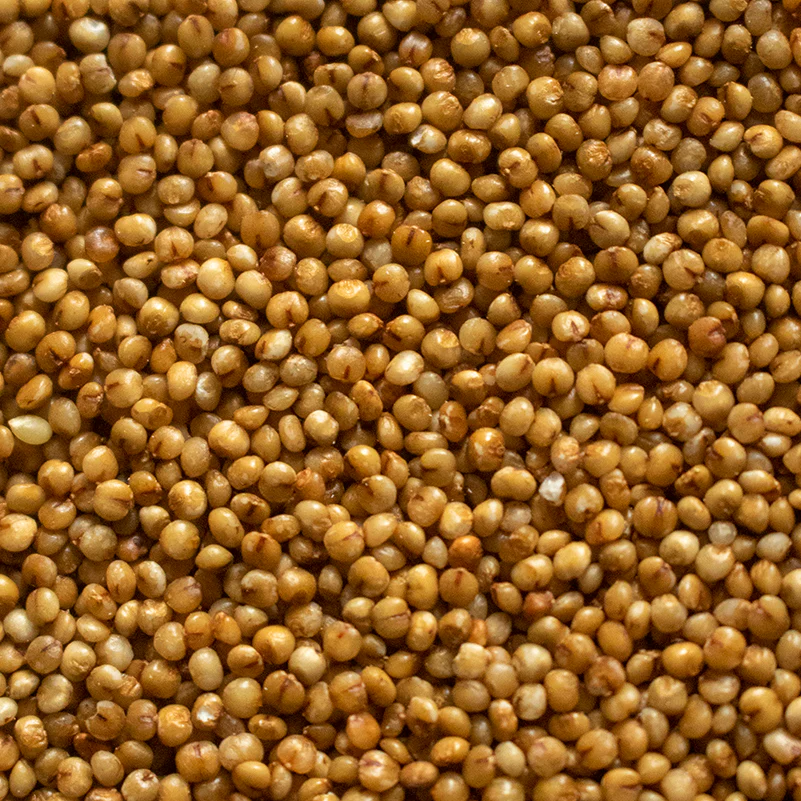
Kodo millet (Paspalum scrobiculatum) is a highly nutritious and resilient millet that is particularly adapted to growing in marginal lands and under rainfed conditions. Kodo Millet is also known as Kodon in Hindi, Varagu in Tamil, and Arikelu in Telugu. Kodo millet has been a staple food in many parts of the world, especially in India and some parts of Southeast Asia, for many centuries.

The origin and cultivation of kodo millet are believed to have occurred in India, possibly as early as 3000 years ago [de Wet, 1981]. Its ability to thrive in poor soils with minimal rainfall made it an essential crop for communities living in less favorable agricultural environments.

Historically, kodo millet was often cultivated in areas where rice and wheat could not be grown successfully. Its hardiness and adaptability to rainfed agriculture made it a reliable source of food security for people in these regions. It was often intercropped with other grains and legumes in traditional farming systems.

While its cultivation has declined in some areas with the introduction of high-yielding varieties of other cereals, kodo millet continues to be an important crop in many parts of India, Nepal, and the Philippines, where it is valued for its nutritional properties and resilience.

Nutritional Profile of Kodo Millets:

Kodo millet offers impressive nutritional profile, often considered to have nutritional superiority over some other major cereals:

  • Carbohydrates: It is a good source of complex carbohydrates, providing sustained energy.
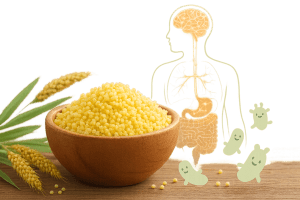
  • Dietary Fiber: Kodo millet is exceptionally rich in dietary fiber, which is beneficial for digestive health, regulating blood sugar, and lowering cholesterol levels. It contains both soluble and insoluble fiber.
  • Protein: It offers a decent amount of protein, contributing to overall nutritional intake.
  • Minerals: Kodo millet is a good source of essential minerals such as iron, calcium, phosphorus, and potassium.
  • Vitamins: It contains some B vitamins, including niacin, thiamin, and riboflavin.
  • Antioxidants: Kodo millet is rich in phenolic compounds and other antioxidants, which help protect the body against oxidative stress and may have anti-inflammatory properties.

Health Benefits of Kodo Millet:

The rich nutritional and phytochemical composition of kodo millet contributes to several health benefits, and it is even believed to possess some medicinal properties in traditional systems of medicine:

  • Diabetes Management: The high fiber content and low glycemic index of kodo millet make it beneficial for managing blood sugar levels and improving insulin sensitivity.
  • Cholesterol Reduction: The high fiber content can help lower bad cholesterol (LDL) levels, reducing the risk of heart disease.
  • Improved Digestion: The abundant dietary fiber promotes healthy bowel movements and prevents constipation.
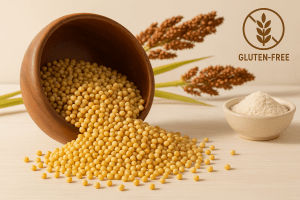
  • Gluten-Free: Being naturally gluten-free, kodo millet is a safe and nutritious option for individuals with celiac disease or gluten intolerance.
  • Antioxidant Activity: The presence of various antioxidants helps protect the body against damage from free radicals and may reduce the risk of chronic diseases.
  • Potential Medicinal Uses: Traditional medicine systems have used kodo millet for its potential benefits in managing conditions like anemia and inflammation, although more scientific research is needed to validate these claims.

Health and Resilience:

Kodo millet offers significant potential for promoting both human health and agricultural sustainability:

  • Hardy Crop: Its ability to grow in marginal lands and under rainfed agriculture makes it a valuable crop for food security in less favorable environments.
  • Nutritional profile of Kodo Millet: Its rich nutritional profile, including high fiber and mineral content, makes it a healthy food choice that can contribute to addressing malnutrition.
  • Gluten-Free Alternative: It provides a nutritious and versatile naturally gluten-free grain option for a growing population with gluten sensitivities.
  • Low Input Requirement: Its ability to grow with minimal inputs makes it a more sustainable and environmentally friendly crop.
  • Potential for Value Addition: Kodo millet can be processed into various food products, offering opportunities for value addition and income generation for farmers.
  • Climate Resilience: Its ability to grow in drought conditions and other environmental stresses makes it a climate-resilient crop for the future.

Kodo Millet growing region:

Kodo millet is primarily cultivated in:

  • India: It is an important crop in many parts of India, including the states of Madhya Pradesh, Chhattisgarh, Maharashtra, Tamil Nadu, and Karnataka, often grown by tribal communities in rainfed areas according to the Indian Institute of Millets Research, Hyderabad.
  • Nepal: It is also cultivated in some parts of Nepal.
  • Philippines: Kodo millet is grown in certain regions of the Philippines.
  • Other Regions: To a lesser extent, it is found in some parts of Africa.

Kodo Millet is a Nutritious Grain for Sustainable future

Kodo millet, with its great resilience and impressive nutritional profile, is a valuable grain, particularly for those living in marginal agricultural environments and those seeking nutritious and gluten-free food options. Its nutritional superiority and potential medicinal properties highlight its importance for health, while its hardiness and low input requirements make it a sustainable crop for the future. Recognizing and promoting the cultivation and consumption of kodo millet can contribute to both food security and improved nutrition in many parts of the world.

Academic References:

  1. de Wet, J. M. J. (1981). Origins of cereal crops of the Old World. In Grasses and grasslands: Systematics and ecology (pp. 101-118). University of Oklahoma Press.
  2. National Institute of Nutrition, Indian Council of Medical Research. (n.d.). Nutrient Composition of Indian Foods. (https://nin.res.in/)
  3. Indian Institute of Millets Research (IIMR). (n.d.). Kodo Millet. (https://iimr.res.in/)
  4. Hadimani, N. A., Malleshi, N. G., & Desikachar, H. S. R. (1997). Studies on milling, nutritional composition and cooking quality of kodo millet (Paspalum scrobiculatum). Journal of Food Science and Technology, 34(3), 226-229.
  5. Gupta, R. K., Kesari, R., Gupta, M., Bhise, S., & Kumar, A. (2011). Nutritional and antioxidant potential of kodo millet (Paspalum scrobiculatum). International Journal of Food Sciences and Nutrition, 62(3), 303-307.