Why do we need more fibre in our diet? Did...
Read MoreWhen it comes to calcium rich foods, most people immediately think of milk and dairy products. However, there's an ancient grain that has been quietly outshining milk in the calcium department for centuries: ragi, also known as finger millet. Milk Calcium Content vs Ragi Calcium Content explores how these two popular calcium sources stack up against each other and what this means for your dietary choices.
Understanding Calcium in Our Diet
Calcium serves as the foundation for strong bones and teeth, accounting for approximately 1.9% of adult body weight. Beyond bone health, calcium plays crucial roles in muscle function, nerve transmission, and blood clotting. The human body contains approximately 1.2kg of calcium, with 99% stored in bones and teeth, whilst the remaining 1% circulates in blood and soft tissues.
With growing concerns about calcium deficiency worldwide, understanding the best dietary sources becomes increasingly important for maintaining optimal health throughout life. Calcium deficiency affects over one billion people globally, leading to increased risks of osteoporosis, fractures, and dental problems. The recommended daily calcium intake varies by age and life stage, ranging from 700mg for adults to 1200mg for older adults and pregnant women.
Modern dietary patterns often fail to meet these calcium requirements, particularly in populations moving away from traditional foods rich in this essential mineral. This shift has created a global health challenge, making it crucial to identify and promote accessible, calcium dense food sources that can help bridge this nutritional gap.
Ragi: The Calcium Power House
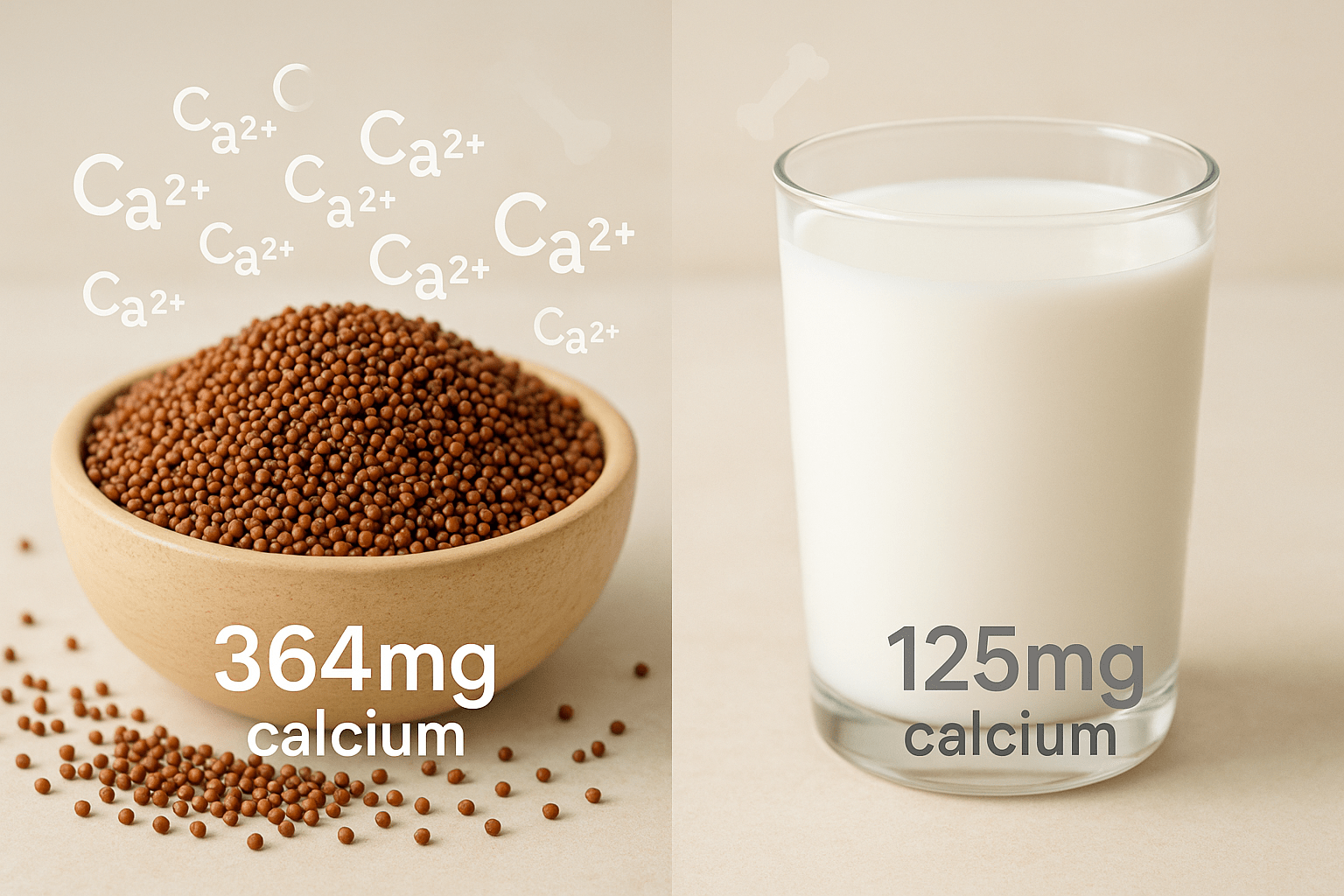
Ragi, scientifically known as Eleusine coracana, stands out as an exceptional calcium source among cereals and grains. Scientific research reveals that ragi contains an impressive 364 ± 58 mg of calcium per 100g, making it one of the most calcium dense plant foods available globally.
What makes ragi particularly remarkable is its consistency across different varieties. Unlike many crops where calcium content varies significantly between cultivars, ragi maintains high calcium levels regardless of the specific variety grown. Studies have documented calcium content ranging from 376 to 515 mg per 100g across wild and domesticated cultivars, demonstrating the grain’s reliability as a calcium source.
This ancient millet has been cultivated for over 4,000 years across Africa and Asia, where it serves as a staple food for millions of people. Archaeological evidence suggests finger millet was first domesticated in the Ethiopian Highlands before spreading across sub-Saharan Africa and eventually reaching India around 3,000 years ago.
Ragi’s ability to thrive in harsh, drought prone conditions whilst maintaining exceptional nutritional value makes it an invaluable crop for food security and nutrition. The plant can grow in poor soils with minimal water requirements, producing yields even when rainfall is as low as 300mm annually. This resilience has made it a crucial survival crop for communities in arid and semi-arid regions.
The calcium in ragi exists primarily in easily digestible forms, bound to organic compounds that enhance bioavailability when properly processed. Traditional preparation methods such as fermentation and malting have been shown to increase calcium absorption rates significantly, making this ancient grain even more nutritionally valuable.
Milk: The Traditional Calcium Standard
Milk has long been considered the gold standard for dietary calcium, and for good reason. Cow’s milk contains approximately 120-125 mg of calcium per 100g, with slight variations depending on fat content. Whole milk, skimmed milk, and semi skimmed milk all provide similar calcium levels, making dairy a consistent calcium source.
The calcium in milk comes in highly bioavailable forms, primarily as calcium phosphate and calcium caseinate, meaning the body can readily absorb and utilise it. Research shows that calcium absorption from milk ranges between 30-35%, which is considered excellent compared to many other food sources. Milk also provides additional nutrients that support calcium absorption, including vitamin D (when fortified), protein, and phosphorus.
These complementary nutrients work together synergistically to enhance the overall nutritional value of milk as a calcium source. The protein in milk, particularly casein, forms complexes with calcium that may improve its absorption in the intestine. Lactose, milk’s natural sugar, also enhances calcium absorption by creating an acidic environment in the gut that keeps calcium in a soluble, absorbable form.
However, milk consumption presents challenges for significant portions of the global population. Lactose intolerance affects approximately 65% of adults worldwide, with particularly high prevalence in Asian, African, and South American populations. This genetic variation in lactase persistence means that many people cannot comfortably consume milk products, creating a need for alternative calcium sources.
Additionally, concerns about dairy farming’s environmental impact, including greenhouse gas emissions and water usage, have led many consumers to seek plant based calcium alternatives. Modern dairy production requires substantial resources, with approximately 1,000 litres of water needed to produce one litre of milk.
Complete Nutritional Comparison: Ragi vs Milk
Nutritional Comparison Table (Per 100g)
| Nutrient | Ragi (Finger Millet) | Whole Milk | Source |
|---|---|---|---|
| Energy | 320-325 calories | 60-65 calories | USDA, Scientific Research |
| Protein | 7.2-9.8g | 3.2-3.4g | Research Studies, USDA |
| Carbohydrates | 66.8-72.6g | 4.8-5.0g | Scientific Literature |
| Fat | 1.3-1.9g | 3.3-4.0g | Nutritional Databases |
| Dietary Fibre | 3.6-19.1g | 0g | Research Publications |
| Calcium | 344-364mg | 119-125mg | Scientific Studies |
| Iron | 3.9-4.6mg | 0.05-0.1mg | Research Data |
| Phosphorus | 139-283mg | 93mg | Scientific Literature |
| Magnesium | 137mg | 10-13mg | Nutritional Research |
| Potassium | 408mg | 151mg | USDA Database |
| Zinc | 2.3mg | 0.4mg | Research Studies |
| Vitamin B12 | Trace | 0.45µg | Nutritional Data |
| Riboflavin (B2) | 0.19mg | 0.18mg | Scientific Sources |
Key Nutritional Insights
Ragi provides 320-325 calories per 100g, making it significantly more energy dense than milk’s 60-65 calories per 100g. This makes ragi an excellent choice for individuals requiring higher caloric intake, whilst milk serves better for those seeking lower calorie options.
The protein content in ragi ranges from 7.3-9.8g per 100g, which is considerably higher than milk’s 3.2-3.4g per 100g. However, milk provides complete proteins with all essential amino acids, whilst ragi’s protein profile may require complementary foods for optimal amino acid balance.
The Striking Comparison: Numbers That Tell the Story
When comparing calcium content directly, the difference between ragi and milk is remarkable. Ragi contains approximately three times more calcium than milk, with 344-364mg per 100g compared to milk’s 119-125mg per 100g. This significant difference positions ragi as an exceptional alternative for those seeking to increase their calcium intake naturally.
Ragi also excels in dietary fibre content with up to 19.1g per 100g, whilst milk contains no dietary fibre. This makes ragi particularly beneficial for digestive health and blood sugar regulation.
To put this into perspective, consuming 100g of ragi flour provides nearly the same amount of calcium as drinking approximately 300ml of milk. For individuals following plant based diets, those with lactose intolerance, or anyone looking to diversify their calcium sources, ragi presents an outstanding opportunity to meet calcium requirements without relying on dairy products.
Global Context and Accessibility
Whilst milk consumption remains widespread in Western countries, ragi consumption is primarily concentrated in parts of Africa and Asia, particularly in India, where it’s known locally as ragi or nachni. However, growing awareness of its nutritional benefits is driving increased interest in ragi globally.
The sustainability aspect of ragi production also deserves consideration. Ragi requires significantly less water than dairy farming and can grow in marginal lands unsuitable for other crops. This makes it an environmentally friendly calcium source that could play an important role in addressing global nutrition challenges whilst supporting sustainable agriculture.
Bioavailability: The Complete Picture
Whilst ragi clearly wins in terms of raw calcium content, bioavailability represents another crucial factor to consider. Milk calcium is generally well absorbed by the body, with absorption rates typically ranging from 30-35%. This high bioavailability is partly due to milk’s protein content and the presence of lactose, which creates optimal conditions for calcium absorption in the digestive system.
Ragi calcium bioavailability can be influenced by processing methods and the presence of compounds like phytates and oxalates, which can inhibit calcium absorption. However, these challenges are not insurmountable. Research has demonstrated that traditional preparation methods such as fermentation, sprouting, and proper cooking can enhance calcium bioavailability from ragi significantly.
Fermentation, in particular, proves highly effective at improving ragi’s nutritional profile. The fermentation process breaks down phytic acid and other anti-nutritional factors that can interfere with mineral absorption. Studies show that fermented ragi products can achieve calcium bioavailability rates comparable to dairy products, whilst maintaining the grain’s superior calcium density.
Sprouting ragi before consumption represents another traditional technique that enhances mineral bioavailability. The sprouting process activates enzymes that break down complex compounds, making minerals more accessible to the digestive system. This ancient food preparation wisdom, backed by modern scientific research, demonstrates how traditional knowledge can optimise nutritional outcomes.
Proper cooking methods also play a crucial role in maximising ragi’s calcium bioavailability. Techniques such as roasting the grain before grinding, using acidic ingredients during preparation, and combining ragi with vitamin C rich foods can all improve calcium absorption rates substantially.
Incorporating Both Sources for Optimal Nutrition
Rather than viewing milk and ragi as competing options, they can complement each other beautifully in a balanced diet. Those who can consume dairy products might use milk for immediate calcium needs whilst incorporating ragi based foods for sustained, high level calcium intake.
Ragi’s versatility makes it easy to incorporate into various dietary patterns. The grain can be consumed as flour for making flatbreads, pancakes, and porridge, as whole grain in salads and soups, or processed into ready to eat products like biscuits and breakfast cereals. Its mild, nutty flavour makes it versatile enough to incorporate into both sweet and savoury dishes across different cuisines.
Traditional Indian cuisine offers numerous examples of delicious ragi preparations: ragi mudde (steamed balls), ragi dosa (fermented pancakes), and ragi malt (nutritious drinks). African cuisines feature finger millet in various forms, from porridges to fermented beverages. These traditional preparations not only taste excellent but also optimise the grain’s nutritional benefits through time tested cooking methods.
Modern food innovation has created new opportunities for ragi consumption. Ragi flour can substitute up to 30% of wheat flour in bread and baked goods without significantly affecting taste or texture. This substitution not only increases calcium content but also adds dietary fibre, iron, and other essential nutrients to everyday foods.
For busy lifestyles, ragi can be incorporated through convenient options like ready to cook mixes, protein bars, and breakfast cereals. Many health focused food companies now offer ragi based products that make it easy to include this nutritional powerhouse in modern diets without requiring extensive cooking knowledge or time investment.
Making Informed Dietary Choices
The choice between milk and ragi for calcium intake depends on individual dietary preferences, restrictions, and cultural backgrounds. Those following vegan diets, individuals with lactose intolerance, or people seeking to reduce their environmental footprint might find ragi an excellent primary calcium source.
However, it’s important to note that both foods offer additional nutrients beyond calcium. Milk provides high quality protein, vitamin B12, and riboflavin, whilst ragi offers dietary fibre, iron, and various antioxidants. A diverse diet incorporating multiple calcium sources typically provides the best nutritional outcomes.
The Future of Calcium Nutrition
As global nutrition awareness grows and dietary patterns evolve, traditional foods like ragi are gaining recognition for their exceptional nutritional profiles. Scientific research continues to explore optimal ways to enhance calcium bioavailability from plant sources, potentially making ragi an even more valuable addition to modern diets.
The comparison between milk and ragi calcium content reveals that sometimes the most nutritious options aren’t always the most obvious ones. Whilst milk remains an excellent calcium source, ragi’s superior calcium content and environmental sustainability make it worthy of serious consideration in any calcium conscious diet.
Understanding these nutritional facts empowers individuals to make informed choices about their calcium intake, whether that involves traditional dairy products, ancient grains like ragi, or a thoughtful combination of both.
Disclaimer: This blog is for informational purposes only and should not replace professional medical advice. Individual nutritional needs vary significantly based on age, health status, lifestyle, and other factors. Before making significant changes to your diet or if you have specific health concerns, please consult with qualified healthcare professionals, registered dietitians, or nutritionists who can provide personalised guidance based on your individual circumstances and health requirements.
Scientific References
- Chandrasekara, A., & Shahidi, F. (2021). Calcium from Finger Millet—A Systematic Review and Meta-Analysis on Calcium Retention, Bone Resorption, and In Vitro Bioavailability. Sustainability, 13(16), 8677. MDPI AG.
- Devi, P. B., Vijayabharathi, R., Sathyabama, S., Malleshi, N. G., & Priyadarisini, V. B. (2014). Health benefits of finger millet (Eleusine coracana L.) polyphenols and dietary fiber: a review. Journal of Food Science and Technology, 51(6), 1021-1040.
- Barbeau, W. E., & Hilu, K. W. (1993). Protein, calcium, iron, and amino acid content of selected wild and domesticated cultivars of finger millet. Plant Foods for Human Nutrition, 43(2), 97-104.
- Shobana, S., Krishnaswamy, K., Sudha, V., Malleshi, N. G., Anjana, R. M., Palaniappan, L., & Mohan, V. (2013). Finger millet (Ragi, Eleusine coracana L.): a review of its nutritional properties, processing, and plausible health benefits. Advances in Food and Nutrition Research, 69, 1-39.
- Kumari, P. L., & Sumathi, S. (2002). Effect of consumption of finger millet on hyperglycemia in non-insulin dependent diabetes mellitus (NIDDM) subjects. Plant Foods for Human Nutrition, 57(3-4), 205-213.
- Singh, K. P., Mishra, A., & Mishra, H. N. (2012). Fuzzy analysis of sensory attributes of bread prepared from millet-based composite flours. LWT-Food Science and Technology, 48(2), 276-282.
- USDA National Nutrient Database for Standard Reference. (2018). Nutrient data for whole milk and finger millet. United States Department of Agriculture.
- Nutritional Evaluation of Decorticated Finger Millet (Finger Millet-Rice) and Its Diversified Nutri-Rich Products. (2017). International Journal of Complementary & Alternative Medicine, 7(6).
- Finger millet (Ragi) as an essential dietary supplement with key health benefits: A review. (2021). Food and Agricultural Immunology, 32(1), 48-67.
- Harvard T.H. Chan School of Public Health. (2024). The Nutrition Source: Milk. Harvard University.
Your Guts Are Your Second Brain: How Millet Impacts Your Gut Health
Understanding Your Second Brain Have you ever experienced butterflies in...
Read More
Farm to Food: The Gluten Free Baking Revolution featuring Millets
The Ancient Grain Making Modern Waves Millets represent more than...
Read More
Is Sorghum (Jowar) Gluten Free? Exploring guide for Celiac Disease, Gluten Free and Healthy Living
If you have celiac disease or gluten sensitivity, finding safe...
Read More