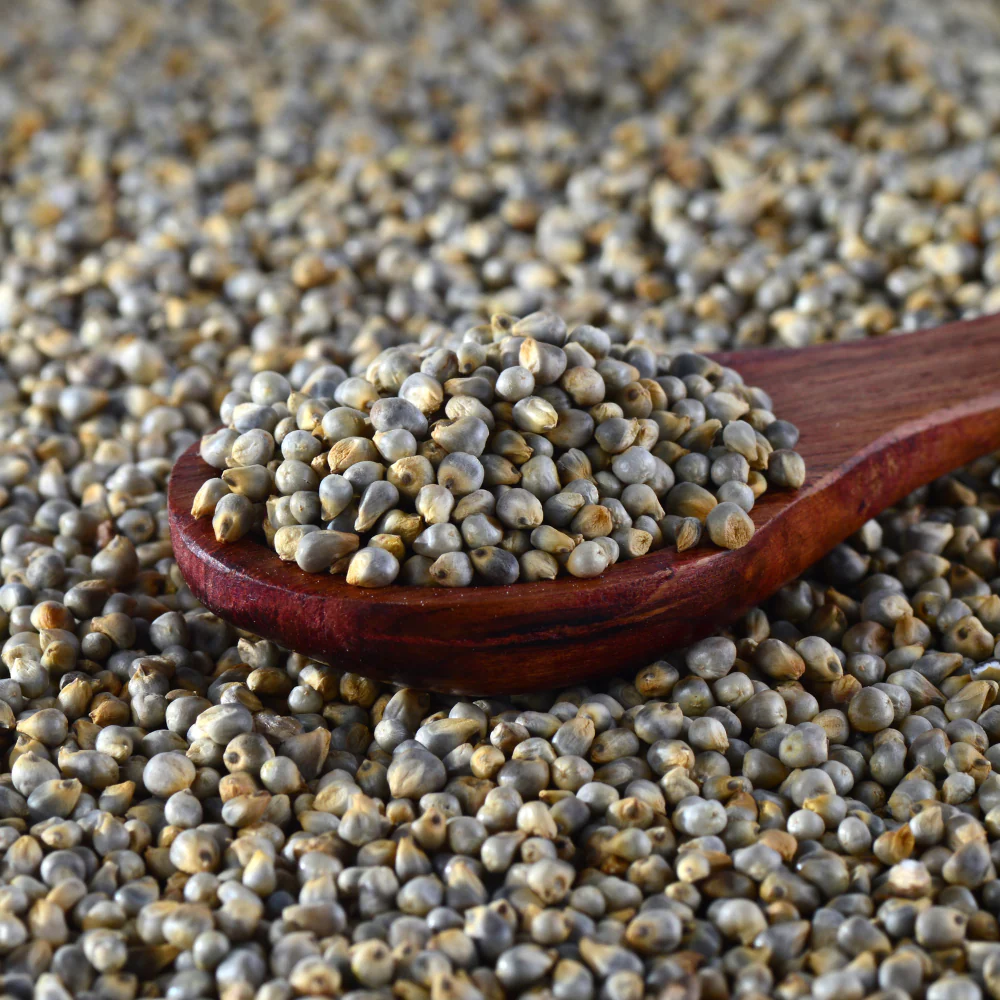
The origins of pearl millet can be traced back to Africa, specifically the Sahel region of West Africa, thousands of years ago. Archaeological evidence suggests that it was cultivated around 4,500 years ago, making it another significant ancient grain from the family of millets. From its African heartland, pearl millet spread across the continent and eventually made its way to India, likely around 2000 BC.
In both Africa and India, pearl millet became an important crop in arid and semi-arid regions. Its remarkable drought tolerance and ability to grow in poor soils made it a reliable food source in environments characterized by low rainfall and high temperatures. It became deeply integrated into the agricultural systems and culinary traditions of these regions.
The resilience of pearl millet ensured food security for communities living in challenging environments. It provided not only grain for human consumption but also valuable fodder for livestock, playing a important role in mixed farming systems.
Pearl Millets grown in tough environments
Pearl millet is not just hardy but it’s also highly nutritious, offering a range of essential nutrients that are particularly important for populations in regions where it is a staple food:
- Carbohydrates: It is a good source of complex carbohydrates, providing sustained energy.
-
- Protein: Pearl millet contains a significant amount of protein, contributing to muscle building and repair.
-
- Fiber: Its high fiber content aids digestion, helps regulate blood sugar, and promotes feelings of fullness.
-
- Iron: Notably, pearl millet is a rich source of non-heme iron, which is crucial for preventing iron deficiency anemia, a widespread health issue in many regions where it is consumed. Biofortified varieties with even higher iron content are being developed to combat this deficiency.
-
- Magnesium: This mineral plays a vital role in numerous bodily functions, including muscle and nerve function, blood sugar control, and blood pressure regulation.
-
- Phosphorus: Essential for bone health and energy production.
-
- Potassium: Helps maintain fluid balance and healthy blood pressure.
-
- B Vitamins: Pearl millet contains various B vitamins important for energy metabolism and nerve function.
-
- Antioxidants: It also contains phenolic compounds that act as antioxidants, protecting cells from damage.
Key Health Benefits of Pearl Millet
Pearl millet is highly nutrional and it translates into several important health benefits:
- Iron Deficiency: Its high iron content makes it an excellent food for preventing and managing iron deficiency anemia, particularly important for women and children in regions where it is a dietary staple.
-
- Improved Blood Sugar Control: The high fiber and complex carbohydrate content contribute to a lower glycemic index, leading to a gradual release of glucose and helping to manage blood sugar levels.
-
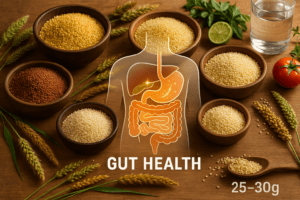
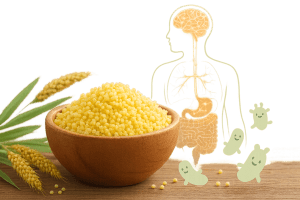
- Enhanced Digestive Health: The significant amount of dietary fiber promotes regular bowel movements and a healthy gut microbiome.
-
- Supports Heart Health: Fiber helps lower cholesterol levels, and the presence of magnesium and potassium contributes to maintaining healthy blood pressure.
-
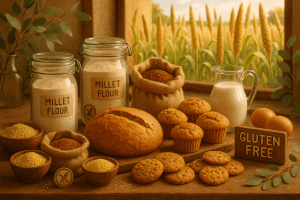
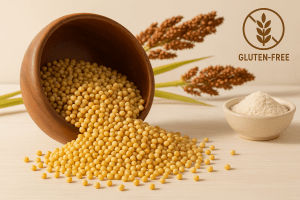
- Gluten-Free: Being naturally gluten-free, pearl millet is a safe and nutritious grain option for individuals with celiac disease or gluten sensitivity.
-
- Antioxidant Properties: The antioxidants present in pearl millet help protect the body against oxidative stress and may reduce the risk of chronic diseases.
Pearl Millet and the future!
Pearl millet holds immense potential, especially in the face of a changing climate:
- Climate Resilience: Its inherent climate resilience, particularly its drought tolerance and heat tolerance, makes it a crucial crop for ensuring food security in regions increasingly affected by climate change.
-
- Food Security : It can easily grow in semi-arid regions with poor soil fertility, where other major crops struggle, making it a vital food source for vulnerable populations.
-
- Nutritional Security: Its high iron content and other essential nutrients can contribute significantly to addressing micronutrient deficiencies in regions where it is a staple.
-
- Forage (Animal feed): Pearl millet is also a valuable forage crop for livestock, providing nutritious feed in dryland areas. Dual-purpose varieties that provide both grain and fodder are particularly important.
-
- Diversification of Food Systems: Promoting pearl millet cultivation and consumption can contribute to the diversification of global food systems, reducing reliance on a few major crops and enhancing resilience.
-
Growing Regions of Pearl Millet
Today, pearl millet continues to be a vital crop in several parts of the world:
- Africa: It remains a major staple crop across the Sahel region of West Africa, including countries like Nigeria, Niger, Senegal, and Mali, as well as in East African countries like Sudan and Uganda.
-
- India: India is the largest producer of pearl millet globally, with significant cultivation in states like Rajasthan, Maharashtra, Gujarat, Uttar Pradesh, and Haryana. It is a crucial part of the diet in these drier regions.
-
- Other Regions: While less significant, pearl millet is also grown in some parts of the Middle East and in limited quantities in the Americas and Australia, often as a forage crop.
Conclusion: A Resilient Grain for a Changing World
Pearl millet has the ability to thrive in challenging environments and provide essential nutrition. Its historical significance in Africa and India, coupled with its remarkable drought tolerance and rich nutritional profile, positions it as an important crop for ensuring food security and promoting health in a world facing increasing climate variability. As we seek more climate-resilient and nutritious food sources, pearl millet deserves greater recognition and investment in research and development to unlock its full potential.
Academic References:
- Varshney, R. K., Kumar, A., Shah, T., Sorrells, M. E., & Gupta, P. K. (2017). Pearl millet genomics: status and prospects. Theoretical and Applied Genetics, 130(5), 843-859. [High Domain Authority .com]
- ICRISAT. (n.d.). Pearl Millet. [This is likely from the International Crops Research Institute for the Semi-Arid Tropics, a reputable research organization]
- FAO. (n.d.). Millets. [Likely from the Food and Agriculture Organization of the United Nations, a .org domain]
- Govindaraj, M., Rai, K. N., اقرار, H. D., & Dwivedi, S. L. (2011). Genetic biofortification for iron in pearl millet. Plant Breeding, 130(6), 643-649. [High Domain Authority .com]
- Bidinger, F. R., Mahalakshmi, V., & Rao, P. P. (2003). Pearl millet: current status and future potential. International Crops Research Institute for the Semi-Arid Tropics. [Likely a .org domain or a publication from a research institute]