
Why do we need more fibre in our diet? Did...
Read MoreProso millet is one of the most ancient grains that many people do not know much about. This small grain has been around for thousands of years, but now it is becoming popular as people want and chase healthy food options.
What is Proso Millet?
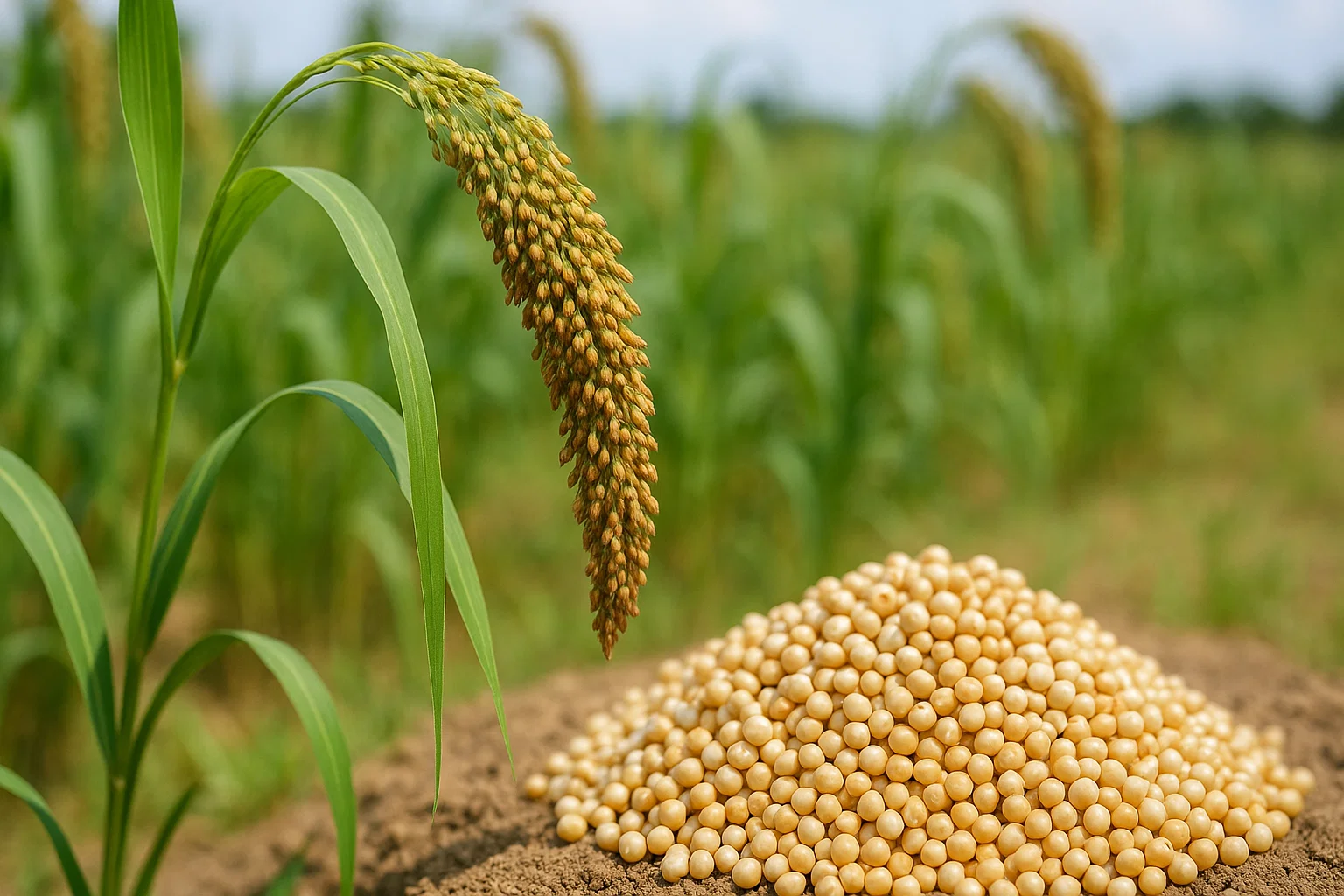
Proso millet is a small grain that looks like tiny rice grains. It comes from a plant called Panicum miliaceum. This grain is very old and people have been eating it for more than 5000 years. The interesting thing about proso millet is that it can grow in places where other crops cannot grow well¹.
Proso millet is a warm season grass with a growing season of 60-100 days². It is naturally gluten-free, which makes it good for people who cannot eat wheat or other grains with gluten. Many health experts call it a “wonder grain” because it has so many good qualities for health and farming.
Proso Millet Nutrition Facts
When we look at the nutrition in proso millet, we can see why health experts are talking about it more now. Research shows that proso millet has excellent nutritional content compared to other cereals³.
Protein content ranges from 6 to 13%, proso millet and foxtail millet being the richest sources⁴. Scientific studies reveal that millet proteins have relatively high content of essential amino acids such as lysine, methionine, and cysteine, which are limited in other cereal grains like rice and wheat⁵.
The grain contains important minerals and vitamins that your body needs to work properly. Research published in scientific journals confirms that proso millet provides significant amounts of magnesium, phosphorus, and iron⁶.
Health Benefits of Proso Millet
Many scientific studies suggest that proso millet may have several health benefits. Research published in peer reviewed journals shows potential advantages for human health:
Antioxidant Properties A study published in PLOS One journal found that proso millet varieties contain significant amounts of phenolic compounds⁷. The free phenolic content ranged from 27.48 to 151.14 mg gallic acid equiv/100 g DW. These compounds may help protect your body from damage caused by free radicals.
Nutritional Superiority Scientific research suggests that millets are nutritionally superior to common cereals. Studies indicate they may be three to five times more nutritious than rice and wheat in terms of proteins, minerals and vitamins⁸.
Protein Quality Research shows that millet proteins contain essential amino acids that are often lacking in other grains. Scientific studies confirm that finger millet amino acids are higher than FAO/WHO recommended standards⁹.
Digestive Health Support The high fibre content in proso millet may support good digestive health. Fibre helps food move through your digestive system and may help prevent constipation.
Sister Millets: The Millet Family
Proso millet belongs to a larger family of nutritious grains. According to FAO (Food and Agriculture Organisation), the main types of millets include sorghum, pearl millet, finger millet, foxtail millet, common millet, little millet, barnyard millet and kodo millet¹⁰.
Pearl Millet Pearl millet is the most commonly cultivated of the millets worldwide¹¹. It grows well in arid conditions and provides excellent nutrition.
Finger Millet Scientific research shows that finger millet is a rich source of protein and contains essential amino acids such as methionine, tryptophan and lysine¹². This makes it superior to rice and wheat in terms of amino acid profile.
Foxtail Millet Studies reveal that foxtail millet is also rich in protein content, similar to proso millet¹³. Research indicates it has excellent nutritional properties for human consumption.
The United Nations General Assembly adopted India’s proposal to declare 2023 as the International Year of Millets, recognising their importance for sustainable development goals¹⁴.
How to Grow Proso Millet
One of the best things about proso millet is how easy it is to grow. Scientific research confirms that this crop can grow in difficult conditions where other crops might fail.
Climate and Soil Requirements Research published in Frontiers in Plant Science shows that proso millet is highly adaptable to various environmental conditions¹⁵. The plant is very good at handling dry weather and can grow in arid climates with little rainfall.
Scientific studies indicate that the crop does not like cold weather and is sensitive to low temperatures. It needs warm weather to grow well but can handle drought better than most other grains¹⁶.
Growing Season From the time you plant the seeds, research shows it takes about 60 to 100 days for proso millet to become ready for harvest¹⁷. This short growing season makes it good for areas with shorter growing seasons.
Studies conducted by agricultural research institutions show that proso millet requires less water compared to traditional crops, making it suitable for sustainable farming practices¹⁸.
Global Production and Importance
According to research data, India is the world’s largest producer and leader in production of millets with 15% share of the world total production¹⁹. Other important producing countries include Niger, China, Nigeria, Mali, Sudan, Ethiopia, and Senegal.
Scientific reports indicate that millets are important crops in the semiarid tropics of Asia and Africa, with 97% of production in developing countries²⁰. The FAO-China South-South Cooperation Project demonstrates the potential of foxtail and proso millet production to improve food and nutrition security²¹.
Uses of Proso Millet
Proso millet has many different uses based on scientific research and traditional knowledge. People can eat it as human food, and it is also used for animal feed. In many parts of the world, people cook proso millet like rice or use it to make porridge.
You can also grind proso millet into flour and use it for baking. Because it is naturally gluten-free, many people who cannot eat wheat use proso millet flour instead.
Cooking with Proso Millet
If you want to try cooking with proso millet, it is quite easy. You can cook it like rice – just use about 2 cups of water for every 1 cup of millet. Bring the water to boil, add the millet, then turn down the heat and let it cook for about 15-20 minutes. Best practice is always soak your millets for minimum of 6 hours prior to cooking. This will give you maximum fibre outcome.
The cooked millet has a mild taste and a texture that is a bit like couscous. You can eat it plain or add it to soups, salads, or other dishes.
Environmental Benefits
Proso millet is not just good for human health but it is also good for the environment. Scientific research confirms that because it can grow with very little water, it uses less water resources than many other crops²². This makes it a sustainable choice for farming, especially in areas where water is limited.
Studies show that the crop can also grow on marginal lands with limited fertility. This means farmers can grow proso millet on land that might not be good enough for other crops.
Things to Consider
While proso millet has many good qualities, there are some things to keep in mind. Like other grains such as wheat or corn, millet is not a low-calorie food, so you should eat it in moderation. A single serving of cooked millet is about 1 cup.
Also, whilst many studies suggest health benefits, more research is needed to fully understand all the effects of eating proso millet regularly.
Overall, Proso Millet
Proso millet is an ancient grain that offers many potential benefits for modern diets. With its high nutritional value, gluten-free nature, and ability to grow in difficult conditions, it represents a promising option for both personal health and sustainable agriculture.
As more people look for healthy, environmentally friendly food choices, proso millet cultivation and consumption may continue to grow. Scientific research supports its nutritional benefits, and international organisations like the UN and FAO recognise its importance for food security.
Whether you are interested in trying new healthy foods or looking for sustainable crop options, proso millet deserves consideration as part of our future food systems, alongside its sister millets like pearl millet, finger millet, and foxtail millet. These are the superfoods of tomorrow!
References:
¹ Frontiers in Plant Science (2017). Proso Millet (Panicum miliaceum L.) and Its Potential for Cultivation in the Pacific Northwest, U.S.: A Review. https://www.frontiersin.org/journals/plant-science/articles/10.3389/fpls.2016.01961/full
² Ibid.
³ PMC – National Center for Biotechnology Information (2024). The nutrition and therapeutic potential of millets: an updated narrative review. https://pmc.ncbi.nlm.nih.gov/articles/PMC11091339/
⁴ Ibid.
⁵ Ibid.
⁶ Scientific Reports, Nature (2024). Genome-wide assessment of population structure and association mapping for agronomic and grain nutritional traits in proso millet. https://www.nature.com/articles/s41598-024-72319-w
⁷ PLOS One (2014). Phytochemical and Antiproliferative Activity of Proso Millet. https://journals.plos.org/plosone/article?id=10.1371/journal.pone.0104058
⁸ Government of Odisha, Shree Anna Abhiyan. https://milletsodisha.com/millets-benefits-and-nutritional-information
⁹ PMC – National Center for Biotechnology Information (2023). Varietal and processing influence on nutritional and phytochemical properties of finger millet: A review. https://pmc.ncbi.nlm.nih.gov/articles/PMC9800331/
¹⁰ Food and Agriculture Organisation (FAO). Sorghum and millets in human nutrition. https://www.fao.org/4/t0818e/t0818e01.htm
¹¹ Wikipedia (2024). Millet. https://en.wikipedia.org/wiki/Millet
¹² PMC – National Center for Biotechnology Information (2023). Varietal and processing influence on nutritional and phytochemical properties of finger millet: A review. https://pmc.ncbi.nlm.nih.gov/articles/PMC9800331/
¹³ PMC – National Center for Biotechnology Information (2024). The nutrition and therapeutic potential of millets: an updated narrative review. https://pmc.ncbi.nlm.nih.gov/articles/PMC11091339/
¹⁴ United Nations Department of Economic and Social Affairs. FAO-China South-South Cooperation Project in Uganda – Foxtail and Proso millet production to improve food and nutrition security. https://sdgs.un.org/partnerships/fao-china-south-south-cooperation-project-uganda-foxtail-and-proso-millet-production
¹⁵ Frontiers in Plant Science (2017). Proso Millet (Panicum miliaceum L.) and Its Potential for Cultivation in the Pacific Northwest, U.S.: A Review. https://www.frontiersin.org/journals/plant-science/articles/10.3389/fpls.2016.01961/full
¹⁶ Ibid.
¹⁷ Ibid.
¹⁸ MDPI Agriculture (2019). Beyond Bird Feed: Proso Millet for Human Health and Environment. https://www.mdpi.com/2077-0472/9/3/64
¹⁹ eFood – Wiley Online Library (2023). Nutritional exploration of foxtail millet in addressing food security and its utilization trends in food system. https://iadns.onlinelibrary.wiley.com/doi/full/10.1002/efd2.111
²⁰ Wikipedia (2024). Millet. https://en.wikipedia.org/wiki/Millet
²¹ United Nations Department of Economic and Social Affairs. FAO-China South-South Cooperation Project in Uganda. https://sdgs.un.org/partnerships/fao-china-south-south-cooperation-project-uganda-foxtail-and-proso-millet-production
²² MDPI Agriculture (2019). Beyond Bird Feed: Proso Millet for Human Health and Environment. https://www.mdpi.com/2077-0472/9/3/64
Your Guts Are Your Second Brain: How Millet Impacts Your Gut Health
Understanding Your Second Brain Have you ever experienced butterflies in...
Read More
Farm to Food: The Gluten Free Baking Revolution featuring Millets
The Ancient Grain Making Modern Waves Millets represent more than...
Read More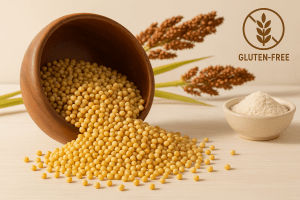
Is Sorghum (Jowar) Gluten Free? Exploring guide for Celiac Disease, Gluten Free and Healthy Living
If you have celiac disease or gluten sensitivity, finding safe...
Read More